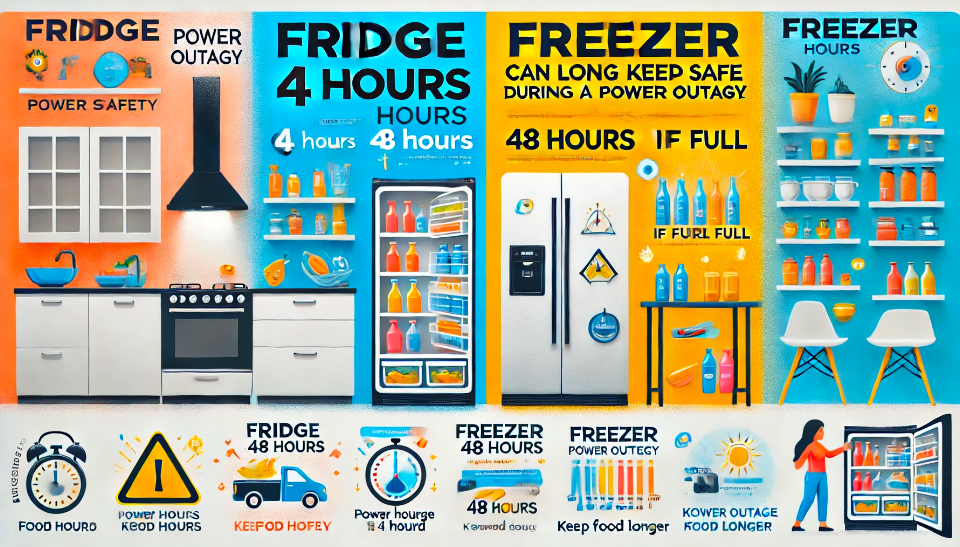
A refrigerator can keep food cold for about 4 hours if it remains unopened during a power outage. For a freezer, the duration extends to about 24–48 hours, depending on whether it is half-full or fully stocked. The duration varies based on the model, insulation, and external conditions. Keeping the doors closed is critical to maintaining the temperature for as long as possible.
Factors Influencing A Fridge’s Cold Retention During A Power Outage
- Insulation Quality: Refrigerators with better insulation retain cold longer.
- External Temperature: High ambient temperatures can reduce the cooling duration.
- Contents Inside: A fuller fridge or freezer retains cold better due to the thermal mass provided by the stored items.
- Frequency of Door Opening: Every time the door is opened, cold air escapes, and warm air enters, reducing retention time.
- Type of Fridge or Freezer: Chest freezers, for instance, usually maintain cold longer compared to upright models due to their design.
Average Time A Fridge Can Stay Cold Without Electricity
A refrigerator generally keeps food cold for about 4 hours, while a freezer can maintain its temperature for up to 48 hours if full and unopened. If the freezer is half-full, the duration reduces to approximately 24 hours. External factors such as insulation and ambient temperature can slightly alter these averages.
How To Minimize Cooling Loss During A Power Outage
- Avoid Opening the Doors: This minimizes the exchange of warm air with cold air inside the appliance.
- Group Items Together: Placing food items close to each other helps retain cold by maintaining a concentrated thermal mass.
- Cover the Fridge or Freezer: Use blankets or insulation materials to add an extra layer of protection.
- Add Ice Packs: Placing ice packs inside can extend the cold-retention period.
- Use a Backup Power Source: A generator or portable power station can help keep the fridge running.
Tips To Keep Your Food Safe When The Power Goes Out
- Freeze Water Containers: Before an outage, freeze containers of water to use as makeshift ice packs.
- Relocate Perishables: Move highly perishable items like dairy and meat to the freezer if space allows.
- Use Coolers: Transfer essential items to a cooler with ice packs if the outage is prolonged.
- Monitor Food Condition: Check for signs of spoilage, such as unusual odors, colors, or textures.
How To Assess Food Safety After A Power Outage
- Check Internal Temperature: If the fridge temperature rises above 40°F (4°C) for more than 2 hours, many perishable items may no longer be safe.
- Examine Food for Spoilage: Look for changes in appearance, smell, or texture in perishable foods like meat, dairy, and eggs.
- Rely on Guidelines: Foods that have thawed but still feel cold to the touch (below 40°F) may be refrozen or cooked immediately.
- Use a Thermometer: If unsure, use a food thermometer to measure the temperature of specific items.
Steps To Prepare Your Fridge For Power Outages
- Adjust the Temperature: Set the fridge and freezer to their lowest settings before an anticipated outage.
- Stock the Freezer: Fill any empty spaces with frozen water containers to improve thermal mass.
- Organize Items: Group foods strategically, with perishables closer together.
- Freeze Essentials: Store items you want to preserve for longer in the freezer.
- Ensure a Tight Seal: Check door seals to confirm they are airtight.
What To Do Immediately After Power Is Restored
- Check the Temperature: Confirm the fridge and freezer have returned to their optimal temperatures.
- Inspect Food Items: Examine food for signs of spoilage based on temperature and appearance.
- Discard Unsafe Items: Perishable items exposed to unsafe temperatures (above 40°F for more than 2 hours) should be discarded.
- Clean and Reset: Wipe down any condensation inside the fridge and reorganize its contents.
- Refill Ice Supplies: Replenish ice packs or frozen water containers for future outages.
Tools To Monitor Fridge Temperature During Outages
- Digital Thermometers: Use a thermometer with a temperature memory function to check if the internal temperature exceeded safe limits.
- Temperature Alarms: These devices alert you when the temperature in the fridge or freezer goes above a set level.
- Smart Fridge Features: Some modern refrigerators offer built-in connectivity for real-time temperature monitoring via smartphone apps.
- Standalone Sensors: Wireless temperature sensors can be placed inside the fridge to provide updates during outages.