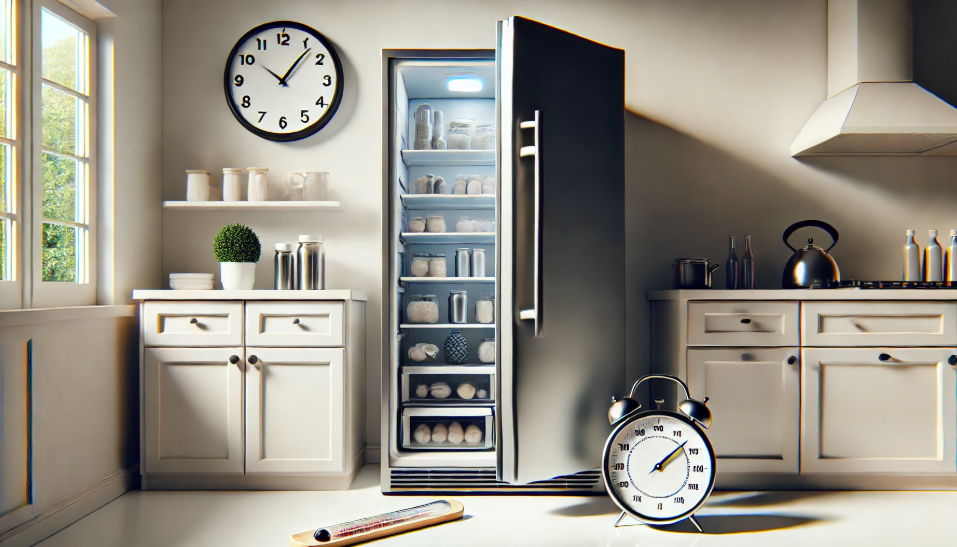
A refrigerator can typically stay cold for 4 to 6 hours after losing power, depending on factors like its insulation, the ambient temperature, and whether the doors remain closed. A fully packed freezer can maintain its temperature for about 48 hours, while a half-full freezer will remain cold for approximately 24 hours. The duration may vary between models and sizes, but minimizing door openings can significantly extend the cooling period.
Understanding The Cooling Capacity Of A Fridge
The cooling capacity of a refrigerator is determined by its ability to maintain a set internal temperature, even in fluctuating external conditions. This depends on the fridge's insulation quality, compressor efficiency, and design. Most modern refrigerators are designed to maintain an optimal temperature of 37°F (3°C) for the fridge compartment and 0°F (-18°C) for the freezer. A well-insulated fridge can retain its temperature longer in the absence of power, but overloading or improper organization of items may reduce its cooling efficiency.
Factors That Influence How Long A Fridge Stays Cold
- Insulation Quality: Better-insulated refrigerators maintain their temperature longer.
- Door Seal Integrity: Tight seals prevent cold air leakage.
- Amount of Stored Food: A fuller fridge retains cold air better, acting as a thermal mass.
- Ambient Temperature: Higher surrounding temperatures increase the rate of heat absorption.
- Duration of Door Openings: Frequent opening and closing let warm air in, reducing the cooling period.
- Fridge Age and Maintenance: Older units or poorly maintained ones lose their cooling efficiency faster.
Ideal Temperature Range For Food Safety
The ideal temperature range to keep food safe is below 40°F (4°C) in the refrigerator and 0°F (-18°C) in the freezer. At temperatures above 40°F, bacteria can start growing rapidly, potentially making food unsafe to consume. To ensure safety, perishable items like meat, dairy, and leftovers should be consumed or refrigerated within 2 hours of reaching unsafe temperatures.
How Long A Fridge Stays Cold Without Opening
If the fridge remains unopened, it can stay cold for 4 hours or more, depending on its insulation and the ambient conditions. An unopened freezer can keep its temperature for 24 to 48 hours. The key is to keep the doors shut to prevent warm air from entering and cold air from escaping.
Extending Fridge Cooling Time During Power Outages
- Minimize Door Openings: Keep the fridge and freezer doors closed as much as possible.
- Use Ice Packs: Place ice packs or frozen water bottles inside to help maintain cold temperatures.
- Group Items Together: Store food items close together to create a thermal mass that retains cold longer.
- Cover with Blankets: Drape heavy blankets or insulation over the fridge to slow down heat transfer, ensuring vents are unobstructed.
- Use a Cooler: Transfer frequently needed items to a cooler with ice to avoid opening the fridge repeatedly.
Recognizing Spoiled Food In A Power Outage
- Check Temperature: If the fridge temperature rises above 40°F for more than 2 hours, perishables may spoil.
- Inspect Smell and Appearance: Foul odors, discoloration, or changes in texture are signs of spoilage.
- Evaluate High-Risk Foods: Discard items like meat, dairy, eggs, and leftovers if they have been above 40°F for over 2 hours.
- Rely on Freezer Ice Crystals: If food in the freezer still has ice crystals or feels cold, it may be safe to refreeze or consume soon.
Preparing Your Fridge For Power Interruptions
- Pre-Cool the Fridge: Set the temperature slightly lower than usual before a known outage.
- Stock with Ice: Fill empty spaces with ice packs or frozen water bottles to maintain the cold.
- Organize Food: Group similar items together and keep high-priority perishables in an accessible spot.
- Keep a Thermometer Inside: Use an appliance thermometer to monitor temperatures and determine food safety.
- Cover Perishables: Store food in airtight containers or wrap them in foil to retain cold.
Safe Disposal Of Perishables Post-Power Outage
- Evaluate Time and Temperature: Discard any perishable food that has been above 40°F for more than 2 hours.
- Separate Spoiled Items: Dispose of spoiled food in sealed bags to prevent contamination or pest attraction.
- Check Packaging: If packaging is swollen, damaged, or leaking, the food inside is likely unsafe.
- Compost What You Can: Non-meat or dairy items that are spoiled can often be composted.
- Clean the Fridge: After discarding spoiled food, thoroughly clean and disinfect the fridge to remove odors and bacteria.