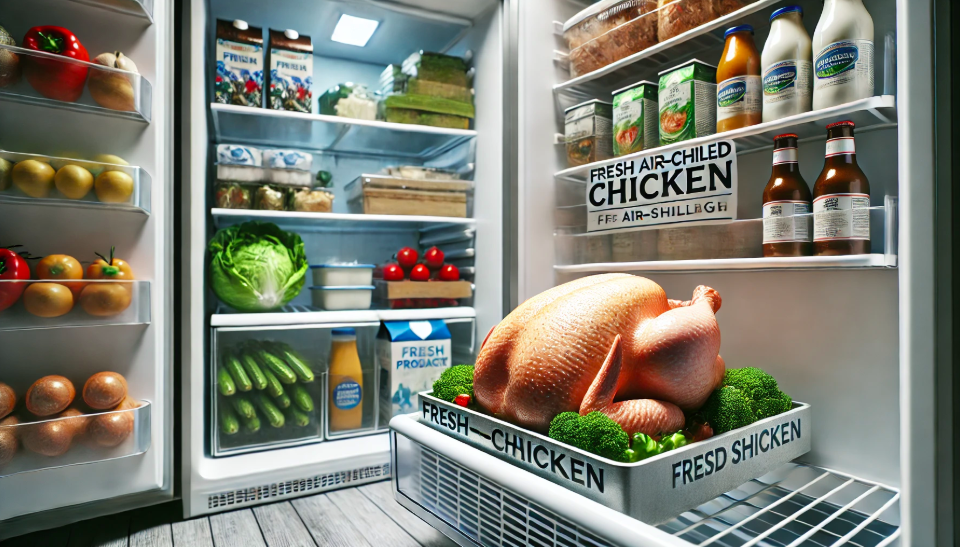
Air-chilled chicken can last in the fridge for about 1 to 2 days past its sell-by date when stored properly. If the chicken is still in its original packaging, it should be placed on a plate or in a shallow dish to catch any liquids that might escape. After opening the package, it's best to cook or freeze the chicken within 1 to 2 days. Always check for signs of spoilage, such as an off smell, slimy texture, or discoloration, before using.
Understanding Air-Chilled Chicken
Air-chilled chicken is poultry that has been cooled using cold air instead of being submerged in water. This method involves hanging the chickens in a controlled environment where cold air circulates around them, gradually reducing their temperature. This process typically takes about three hours.
Benefits of Air-Chilled Chicken:
- Better Flavor and Texture: Since the chicken doesn't absorb water, it maintains its natural taste and texture. This results in meat that is more flavorful and tender.
- Crispier Skin: The absence of extra water allows the skin to become crispier when cooked, enhancing the overall eating experience.
- No Added Water Weight: Traditional water-chilling can cause chicken to absorb water, adding weight and diluting flavor. Air-chilled chicken avoids this issue, providing a more concentrated taste.
Tips for Extending the Shelf Life of Air-Chilled Chicken
To extend the shelf life of air-chilled chicken, here are some simple tips based on trusted sources:
- Proper Storage: Always store chicken in the fridge or freezer immediately after purchase. If you plan to use it within a few days, keep it in the fridge at 40°F (4°C) or lower. For longer storage, freeze the chicken. Proper freezing can keep it safe for several months.
- Keep it Covered: Store the chicken in an airtight container or wrap it tightly in plastic wrap or aluminum foil. This helps to prevent moisture loss and protects the chicken from contamination.
- Avoid Cross-Contamination: When handling chicken, always wash your hands, utensils, and surfaces thoroughly to avoid transferring bacteria from raw chicken to other foods. This is important for both food safety and maintaining freshness.
- Use Within Recommended Time: Even when stored correctly, chicken should be consumed within the recommended time. Fresh, air-chilled chicken should ideally be used within 1-2 days if refrigerated. If frozen, it can last up to 12 months, but for best quality, it is recommended to use it within 6 months.
- Check for Freshness: Before cooking, check the chicken for any signs of spoilage, such as off smells, a slimy texture, or discoloration. If it appears spoiled, discard it to avoid foodborne illness.
- Avoid Thawing and Refreezing: Thaw chicken in the fridge, not on the counter, to keep it safe. Once thawed, do not refreeze it unless it's cooked. Repeated thawing and refreezing can reduce quality and increase the risk of bacteria growth.
Can You Freeze Air-Chilled Chicken for Longer Storage?
Yes, you can freeze air-chilled chicken to keep it fresh for a longer time. Air-chilled chicken is cooled using cold air instead of water, which helps it maintain its natural flavor and texture.
How to Freeze Air-Chilled Chicken:
- Prepare the Chicken: Ensure the chicken is fresh and hasn't been in the refrigerator for too long.
- Wrap It Properly: Wrap the chicken tightly in plastic wrap or aluminum foil. Alternatively, you can use resealable freezer bags.
- Label and Date: Write the date on the package so you can keep track of how long it has been in the freezer.
- Store in the Freezer: Place the wrapped chicken in the coldest part of your freezer, usually towards the back.
Signs That Air-Chilled Chicken Has Gone Bad
Air-chilled chicken is processed by cooling the carcasses with cold air instead of water, which can help reduce bacterial contamination.
To determine if air-chilled chicken has spoiled, look for these signs:
1. Unpleasant Odor: Fresh chicken has little to no smell. If it emits a sour, ammonia-like, or rotten egg odor, it's spoiled and should be discarded.
2. Color Changes: Raw chicken should be light pink with white fat. If it turns gray, green, or yellow, it's a sign of spoilage.
3. Slimy or Sticky Texture: Fresh chicken feels moist and slightly slippery. If it becomes slimy, sticky, or tacky, it's no longer safe to eat.
4. Mold Growth: Visible mold on chicken indicates spoilage. If you see any mold, discard the chicken immediately.