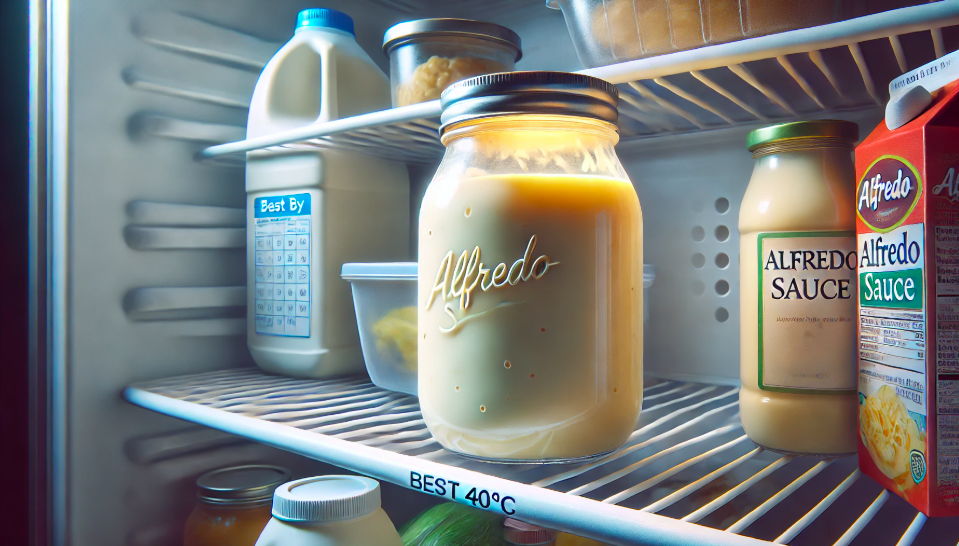
Alfredo sauce can last in the fridge for about 3 to 5 days when stored properly in an airtight container. The sauce should be cooled down to room temperature before being refrigerated to prevent bacterial growth. After 5 days, the sauce may begin to spoil or lose its flavor and texture.
Understanding Alfredo Sauce Storage
Proper storage of Alfredo sauce is crucial to keeping it fresh and safe to eat. It should be placed in an airtight container or tightly sealed jar to avoid contamination from other foods and exposure to air. The fridge should be set at or below 40°F (4°C), as this temperature slows bacterial growth and helps maintain the sauce’s quality.
Factors Affecting The Shelf Life Of Alfredo Sauce
Several factors can affect how long Alfredo sauce lasts:
- Ingredients: Homemade Alfredo sauce made with fresh cream, butter, and cheese tends to spoil faster than store-bought versions, which may contain preservatives.
- Storage conditions: If the sauce isn’t stored in an airtight container or at the correct temperature, it may go bad more quickly.
- Contamination: If the sauce has been in contact with utensils or food that weren’t clean, it can spoil sooner.
- The presence of additives or preservatives: Pre-made or jarred Alfredo sauce may last longer due to added preservatives that extend shelf life.
Signs Alfredo Sauce Has Gone Bad
There are a few clear signs that Alfredo sauce has gone bad:
- Smell: If the sauce has a sour or off-putting odor, it is no longer safe to consume.
- Texture changes: If the sauce has separated or become grainy, it may be spoiled, especially if the cream has curdled.
- Mold: Any visible mold growth on the surface of the sauce is a sign of contamination, and the sauce should be discarded.
- Taste: If the sauce tastes sour or unpleasant, it’s an indication that it has gone bad.
Best Practices For Storing Alfredo Sauce
To keep Alfredo sauce fresh:
- Cool it down quickly: Allow the sauce to cool to room temperature before refrigerating to avoid the growth of bacteria.
- Use an airtight container: This will prevent moisture and air from spoiling the sauce.
- Label the container: If you’re not sure when the sauce was made, label it with the date so you can keep track of how long it’s been in the fridge.
- Avoid double-dipping: Always use clean utensils to scoop out sauce to prevent contamination.
Can You Freeze Alfredo Sauce?
Yes, you can freeze Alfredo sauce, but it may not retain its original texture once thawed. Freezing can cause the cream and cheese to separate, leading to a watery or grainy texture. To freeze, place the sauce in an airtight container or a freezer-safe bag, leaving some space at the top for expansion. It will last for about 3 months in the freezer. When ready to use, thaw it overnight in the fridge and reheat gently.
How To Reheat Alfredo Sauce
To reheat Alfredo sauce:
- Stovetop: Place the sauce in a saucepan over low to medium heat. Stir continuously to prevent burning and help restore the smooth texture.
- Microwave: Heat the sauce in short intervals, stirring in between to ensure it heats evenly. Be cautious not to overheat, as it can cause the sauce to break or curdle.
- Add cream or milk: If the sauce becomes too thick while reheating, add a splash of cream or milk to bring it back to a creamy consistency.
Keeping Alfredo Sauce Fresh Longer
To extend the shelf life of Alfredo sauce:
- Refrigerate promptly: Always refrigerate the sauce within two hours of cooking to prevent bacterial growth.
- Minimize exposure to air: Keep the sauce in an airtight container to prevent oxidation and contamination from other foods.
- Avoid repeated reheating: Reheating multiple times can degrade the sauce’s quality and safety, so try to reheat only the portion you plan to use.
- Use preservatives or stabilizers (for homemade sauce): If you make Alfredo sauce from scratch and want to extend its shelf life, consider adding stabilizers like cornstarch or guar gum, which can help maintain its consistency during storage.