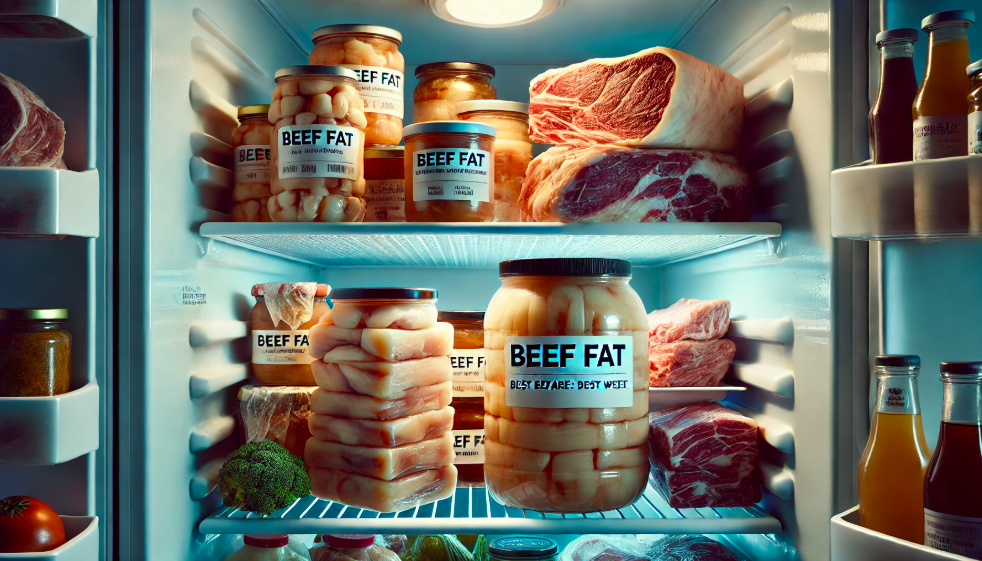
When properly stored, beef fat can last a long time in the refrigerator. Its naturally low moisture content and high fat concentration make it less susceptible to spoilage compared to many other foods. Typically, rendered beef fat can last up to 6 to 12 months in the fridge when stored in airtight containers. In optimal conditions, some sources suggest it may even remain fresh for up to 18 months.
However, its longevity depends on the storage conditions. Factors such as cleanliness during preparation, sealing of containers, and temperature stability in the refrigerator all play a role. If any of these factors are compromised, the fat may spoil sooner. For the best results, inspect the fat periodically and use it within the recommended time frame to ensure freshness and safety.
What Is Beef Fat And Why Is It Stored?
Beef fat, also known as tallow when rendered, is the fat extracted from beef, either as a byproduct of cooking or through a rendering process. It is highly versatile and serves both culinary and non-culinary purposes. In cooking, beef fat is prized for its rich flavor and high smoke point, making it an excellent choice for frying and roasting. Its texture and flavor also enhance baked goods, stews, and other dishes. Beyond the kitchen, beef fat is used in making soaps, candles, and skin care products due to its moisturizing and nourishing properties.
Storing beef fat allows individuals to make full use of this valuable resource, minimizing waste. Proper storage is particularly important because it helps maintain its quality, flavor, and safety for extended periods. Whether used for cooking or crafting, well-stored beef fat can last a long time and retain its many benefits.
Proper Storage Techniques For Beef Fat In The Fridge
Proper storage of beef fat in the refrigerator is crucial for maintaining its freshness and usability. Here are step-by-step instructions:
- Render and Cool the Fat: If you’re preparing tallow yourself, render it by heating raw beef fat on low heat until it melts completely. Once rendered, allow it to cool to room temperature. Cooling prevents condensation inside storage containers, which can lead to spoilage.
- Choose Airtight Containers: Use clean, airtight containers such as glass jars with sealing lids or food-safe plastic containers. Airtight containers minimize exposure to oxygen, reducing the risk of oxidation and rancidity.
- Avoid Contamination: Before transferring the fat, ensure all utensils and containers are clean and dry. Even a small amount of water or food particles can promote bacterial growth and spoilage.
- Refrigeration: Place the sealed containers in the refrigerator. Store the tallow away from foods with strong odors, such as onions or garlic, as fat can absorb these smells.
- Label and Date: Clearly label each container with the date it was stored. This helps you keep track of freshness and usage.
Signs That Beef Fat Has Gone Bad
Despite its long shelf life, beef fat can spoil over time if not stored correctly or used promptly. Here are key signs to look out for:
- Unpleasant Odor: Fresh beef fat has a neutral or slightly beefy smell. If it develops a sour, rancid, or overly strong odor, it has likely gone bad.
- Discoloration: Fresh tallow is typically white or pale yellow in color. If you notice darkening, yellowing, or the presence of mold, these are clear signs of spoilage.
- Texture Changes: Spoiled beef fat may develop a grainy or slimy texture. Fresh fat should be smooth and solid at room temperature.
- Off Taste: If used in cooking, spoiled beef fat will produce an unpleasant or sour taste in your food.
If you notice any of these signs, it’s best to discard the fat. Consuming spoiled fat can lead to unpleasant flavors in food and potential health risks.
Can You Freeze Beef Fat for Longer Storage?
Yes, freezing beef fat is an excellent way to extend its shelf life beyond what refrigeration allows. Properly frozen beef fat can last up to 2 years, maintaining its quality and flavor. Follow these steps to freeze beef fat effectively:
- Cool the Fat Completely: Before freezing, ensure the fat is fully cooled to prevent condensation and freezer burn.
- Divide into Portions: If you have a large amount of fat, divide it into smaller portions. This makes it easier to defrost only what you need without exposing the rest to air.
- Use Airtight Packaging: Store the fat in freezer-safe airtight containers, vacuum-sealed bags, or heavy-duty freezer bags. Remove as much air as possible to reduce oxidation.
- Label and Date: Clearly label the packaging with the storage date for easy tracking.
- Place in Freezer: Store the containers in the coldest part of the freezer, away from temperature fluctuations caused by opening and closing the door.
When ready to use, thaw the required amount of fat in the refrigerator or at room temperature. Avoid refreezing previously thawed fat, as repeated freezing and thawing can degrade its quality.
Tips to Maximize the Shelf Life of Beef Fat
To ensure your beef fat stays fresh and usable for as long as possible, consider these practical tips:
- Maintain Cleanliness:
- Seal Containers Properly:
- Store in a Cool, Dark Place:
- Avoid Cross-Contamination:
- Use Smaller Containers:
- Monitor Regularly:
- Reheat Carefully: