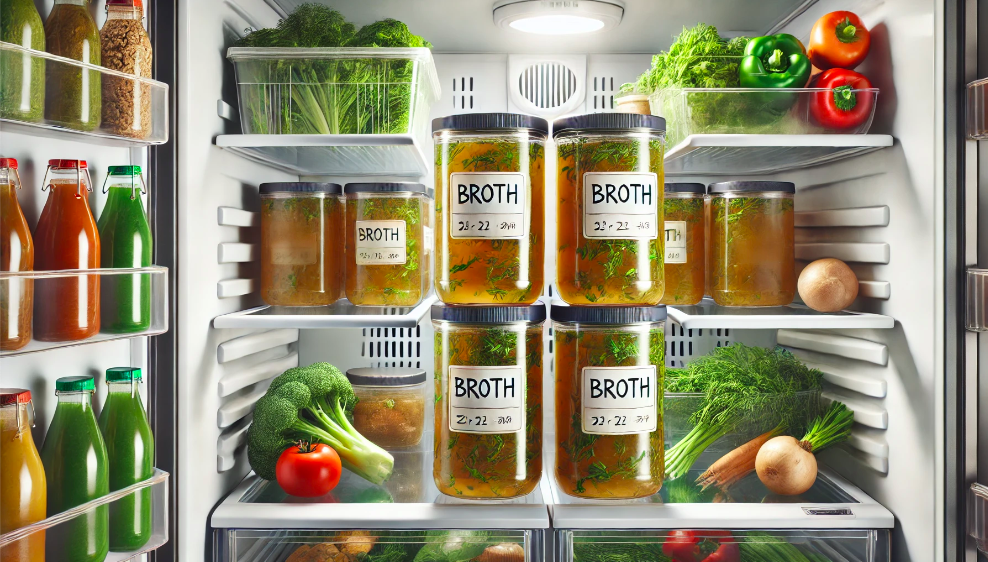
Broth typically lasts in the fridge for about 3 to 4 days. To maximize its freshness, store it in an airtight container. Always check for signs of spoilage such as changes in smell, color, or texture before consuming. If you need to store it for a longer period, freezing broth is a good option and can extend its shelf life for up to 4 to 6 months.
Factors Affecting Broth Shelf Life In The Fridge
The shelf life of broth in the refrigerator depends on several key factors:
- Temperature: Keeping your fridge at the right temperature is essential. The ideal temperature for storing broth is below 40°F (4°C).
- Storage Conditions: Proper storage is crucial. Broth should be kept in an airtight container to minimize exposure to air, which can cause spoilage.
- Ingredients Used: The type of ingredients used in your broth can also affect its shelf life. For example, broths with high-fat content or dairy ingredients may spoil faster.
- Preparation Method: How you prepare your broth, including cooking time and sanitation practices, affects its longevity.
- Handling and Hygiene: Proper handling and hygiene practices are important. Avoid leaving broth at room temperature for extended periods before refrigerating it.
Signs That Your Broth Has Gone Bad
Broth can spoil over time, making it unsafe to consume. To ensure your broth is still good, look for these signs:
- Unpleasant SmellFresh broth has a savory aroma. If it smells sour, rotten, or off, it's a clear sign that it has spoiled.
- Mold or DiscolorationCheck for any mold growth, which may appear as fuzzy spots on the surface. Also, if the broth has changed color, becoming darker or cloudy, it indicates spoilage.
- Strange TextureIf the broth feels slimy, lumpy, or has an unusual texture, it may be spoiled.
- Sour TasteA sour or off taste is a strong indicator that the broth has gone bad.
- Bubbling or FoamingIf you notice bubbling or foaming in the broth, it suggests bacterial growth, and the broth should be discarded.
How To Extend The Shelf Life Of Broth In The Fridge
Here are the steps to extend the shelf life of broth in the fridge, with references provided at the end:
- Cool the Broth Quickly: After cooking, let the broth cool to room temperature within two hours. This helps prevent bacterial growth.
- Use Airtight Containers: Transfer the cooled broth into clean, airtight containers to minimize exposure to air, which can cause spoilage.
- Refrigerate Promptly: Place the sealed containers in the refrigerator immediately. Ensure the fridge is at a temperature below 40°F (4°C) to keep the broth safe.
- Label and Date: Label each container with the date it was stored to track its age and ensure you use it within a safe period.
How To Safely Reheat Leftover Broth
Reheating:
- Stovetop: Pour the broth into a pot and heat over medium heat. Stir occasionally to prevent burning.
- Microwave: Place the broth in a microwave-safe container. Cover loosely to allow steam to escape. Heat on medium power in short intervals, stirring between each, until the broth reaches a rolling boil.
Temperature Check:
Use a food thermometer to ensure the broth reaches an internal temperature of 165°F (74°C).
Serving:
Serve the broth immediately after reheating. Do not leave it at room temperature for more than two hours.
Reheat Once:
It is safe to reheat broth once. Reheating multiple times can increase the risk of bacterial growth.