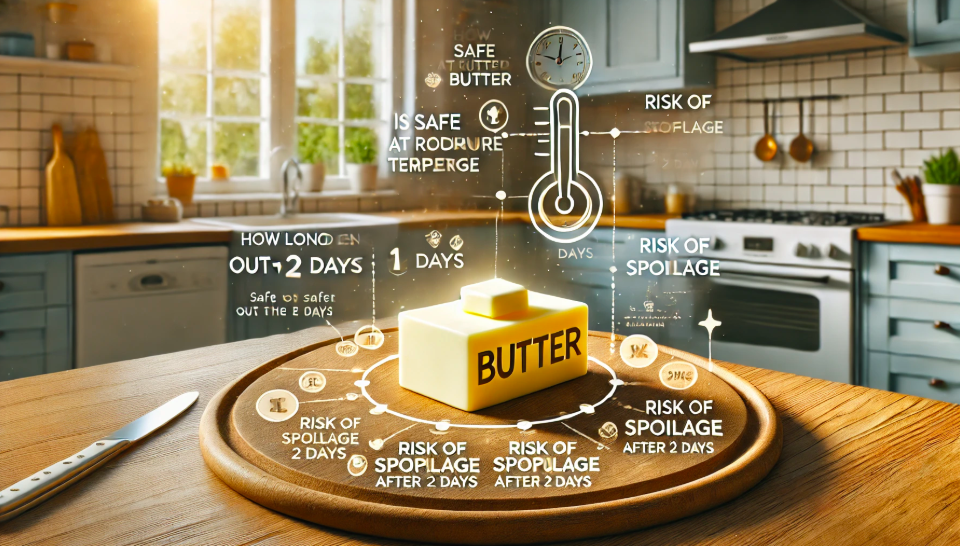
Butter can generally last at room temperature for 1-2 days, depending on the room’s temperature and humidity. In cooler environments (below 70°F or 21°C), butter may remain fresh for up to a week if kept covered. However, unsalted butter is more prone to spoilage and should be used more quickly. Always check for any signs of spoilage before consuming.
Understanding Butter Storage Basics
Butter is made from cream, containing about 80% fat, with the remaining components being water and milk solids. The high-fat content makes butter less prone to bacterial growth than other dairy products, but it is not immune to spoilage. Proper storage ensures that butter retains its flavor, texture, and safety. Refrigeration slows down the oxidation and bacterial activity that can degrade butter, while leaving it exposed to heat or air can lead to rancidity.
How Long Can Butter Last At Room Temperature?
At room temperature, salted butter typically stays fresh for 2-3 days, especially in a clean, dry environment. Salt acts as a preservative, slowing down the growth of bacteria. Unsalted butter, on the other hand, may only last 1-2 days because it lacks the salt that helps preserve it. After this period, the risk of butter developing off flavors or going rancid increases significantly.
Signs That Butter Has Gone Bad
- Unpleasant Smell: Butter that has turned rancid emits a sour or unpleasant odor, distinctly different from its usual creamy smell.
- Color Changes: Fresh butter is pale yellow or white, depending on the cream used. Spoiled butter may develop dark yellow spots or streaks.
- Texture Issues: Spoiled butter might feel slimy or sticky instead of smooth and creamy.
- Mold Growth: If mold appears, even on the surface, the butter should be discarded.
- Off Taste: A bitter or sour taste is a clear indication that butter is no longer safe to use.
Does Salted Butter Last Longer Than Unsalted Butter?
Yes, salted butter lasts longer than unsalted butter because salt acts as a natural preservative. The salt slows down microbial growth and oxidation, extending its shelf life both at room temperature and in the fridge. Unsalted butter, while ideal for baking, spoils more quickly due to the absence of preservatives.
Safe Practices For Storing Butter Outside The Fridge
- Use a Butter Dish: Keep butter in a covered butter dish to protect it from exposure to air, dust, and contaminants.
- Choose a Cool Spot: Store butter in a location away from direct sunlight, heat sources, or high humidity.
- Limit Air Exposure: If possible, wrap butter in parchment paper or a sealed container to prevent oxidation.
- Use Quickly: When storing butter outside the fridge, use it within a day or two to avoid spoilage.
Tips To Extend Butter’s Shelf Life Without Refrigeration
- Keep it Covered: Always store butter in an airtight container or a traditional butter crock to block out air and bacteria.
- Use Salted Butter: Salted butter has a longer shelf life compared to unsalted varieties, making it better suited for storage without refrigeration.
- Opt for Ghee: Ghee, a clarified butter with the water and milk solids removed, has a significantly longer shelf life at room temperature.
- Store in a Butter Bell: Butter bells are designed to create an airtight seal using water, keeping butter fresh for up to a week.
- Minimize Handling: Use clean utensils to take out butter to prevent introducing contaminants.
Frequently Asked Questions About Butter Storage
1. Can you freeze butter to extend its shelf life? Yes, freezing butter can extend its shelf life for up to 6-12 months. Wrap it tightly in foil or plastic and store it in an airtight container to prevent freezer burn.
2. Is it safe to leave butter out overnight? If the room temperature is cool (below 70°F or 21°C) and the butter is salted, it is generally safe to leave it out overnight. However, always check for any signs of spoilage before use.
3. Does whipped butter spoil faster than regular butter? Yes, whipped butter contains more air and less fat, making it more susceptible to spoilage, especially at room temperature.
4. Why does butter sometimes turn white on the surface? This can occur due to exposure to air, causing a process called oxidation. While it may not indicate spoilage, it can affect the flavor.
5. Can you store butter in oil to preserve it? Yes, immersing butter in oil (like olive oil) can create an air-tight barrier, helping extend its shelf life without refrigeration.