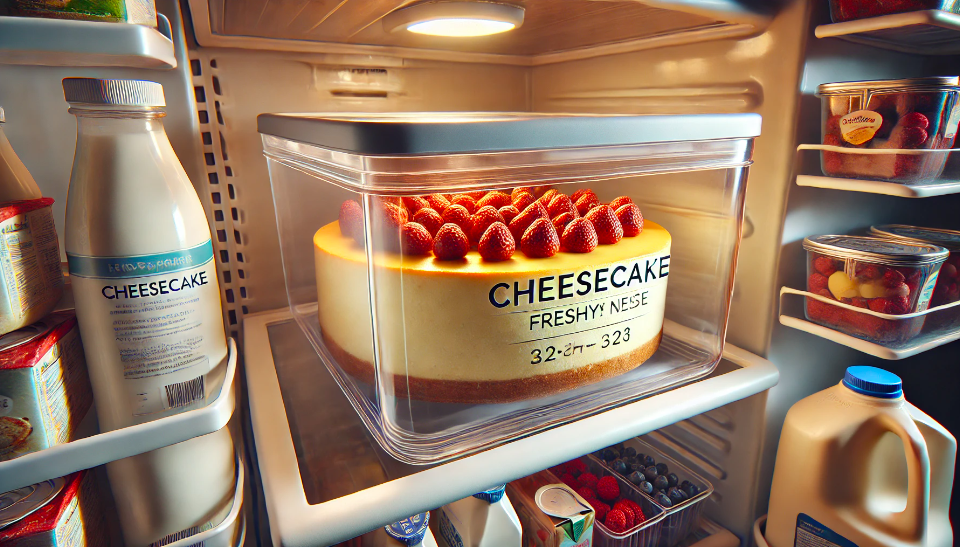
Cheesecake can generally last for 5 to 7 days when stored in the fridge. The exact duration depends on factors such as ingredients, freshness at purchase, and proper storage methods. Freshly made cheesecake may last a full week if stored properly, while store-bought varieties might have preservatives that can extend its shelf life slightly longer. However, for optimal taste and safety, it’s best to consume cheesecake within this 5 to 7 day window.
Properly Storing Cheesecake In The Fridge
To keep cheesecake fresh, it’s essential to store it correctly. Begin by wrapping the cheesecake tightly in plastic wrap to prevent air exposure, which can lead to drying and absorption of other odors. Alternatively, you can place the wrapped cheesecake in an airtight container for added protection. Keeping the cheesecake covered helps it retain its moisture and flavor and prevents bacterial growth, keeping it fresher for longer. Make sure to place the cheesecake on a stable, flat surface in the fridge to avoid any tipping or damage.
Ideal Fridge Temperature For Cheesecake
The ideal temperature for storing cheesecake in the fridge is between 35°F and 40°F (1.7°C to 4.4°C). At this range, bacteria grow more slowly, helping preserve the cheesecake’s freshness and preventing spoilage. Most household refrigerators are set within this range, but it’s good to check with a thermometer to ensure the temperature is stable. Maintaining this temperature is critical, as cheesecake contains dairy and eggs, which can spoil easily if stored in warmer conditions.
Signs Your Cheesecake Has Spoiled
Spoiled cheesecake often shows clear signs, such as:
- Discoloration: Look for any color changes, especially if it appears yellowed or has dark spots.
- Dryness or Cracks: While cracks can happen naturally, a dry, shriveled surface indicates that the cheesecake is losing moisture and freshness.
- Foul Odor: A sour or off smell is a strong indicator that the cheesecake has gone bad.
- Texture Changes: If the cheesecake feels slimy or unusually hard, it’s likely no longer safe to eat. If you notice any of these signs, it’s best to discard the cheesecake to avoid foodborne illness.
Shelf Life Of Homemade Cheesecake In The Fridge
Homemade cheesecake typically has a shorter shelf life than store-bought varieties, lasting about 4 to 5 days in the fridge. Since homemade versions lack preservatives found in commercial cheesecakes, they spoil faster. Storing homemade cheesecake properly is essential, which includes sealing it tightly and maintaining a constant fridge temperature between 35°F and 40°F. Eating homemade cheesecake within this time frame will ensure the best flavor and texture.
Differences In Shelf Life For Store-Bought Cheesecake
Store-bought cheesecake often contains preservatives that help extend its shelf life, allowing it to last between 5 to 7 days when refrigerated. Additionally, some brands may use packaging designed to keep the cheesecake fresh longer. However, once you open the package, its shelf life decreases, so be sure to wrap it well and consume it within a week. Even with preservatives, it’s essential to store the cheesecake properly and check for any signs of spoilage.
Tips To Extend Cheesecake Freshness
- Wrap Tightly: Use plastic wrap or foil to keep out air and moisture.
- Use an Airtight Container: Store the wrapped cheesecake in an airtight container to prevent it from absorbing odors.
- Avoid Temperature Fluctuations: Try not to open the fridge door frequently, as fluctuating temperatures can speed up spoilage.
- Divide Portions: If you only plan to eat a slice or two, slice the cheesecake and store individual pieces separately. This helps preserve the whole cheesecake by reducing exposure to air each time you take a portion.
Freezing Cheesecake For Extended Storage
Freezing is an excellent way to store cheesecake long-term, as it can last up to 2 to 3 months when frozen properly. Start by wrapping the cheesecake in plastic wrap, then cover it in aluminum foil to prevent freezer burn. You can also store it in a freezer-safe airtight container. Freezing helps preserve both the texture and flavor, although it’s best to consume it within a few months for the best taste. Avoid refreezing once thawed, as this can damage the texture and make it less enjoyable.
How To Thaw Frozen Cheesecake Properly
To thaw frozen cheesecake, transfer it from the freezer to the fridge. Allow it to defrost slowly overnight or for at least 6 to 8 hours. Thawing in the fridge helps retain the cheesecake’s texture and prevents it from becoming too soft. Avoid thawing at room temperature, as this can cause uneven thawing and lead to potential bacterial growth. Once thawed, cheesecake should be consumed within 1 to 2 days and should not be refrozen.
How Long Cheesecake Can Sit Out Safely
Cheesecake should not sit out for more than 2 hours at room temperature. Dairy and egg ingredients make cheesecake particularly susceptible to bacteria growth, which accelerates in warm environments. In hotter conditions, such as a warm room or outdoor setting, this time may be reduced to 1 hour. After this, bacteria levels can reach unsafe levels, increasing the risk of foodborne illness. It’s best to serve cheesecake promptly and return any leftovers to the fridge as soon as possible.