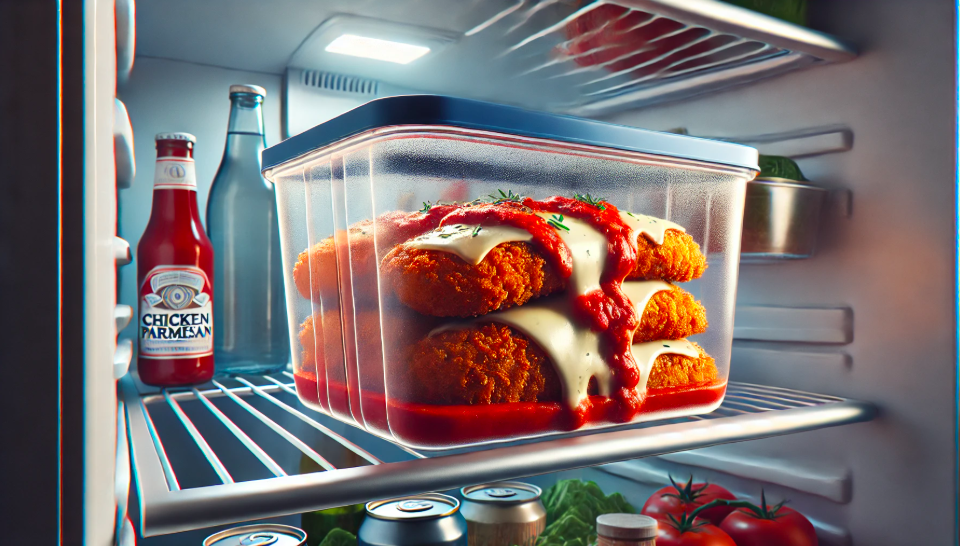
Chicken Parmesan (Chicken Parm) can typically be stored in the fridge for 3 to 4 days. It’s important to place it in an airtight container to keep it fresh for as long as possible.
Make sure to refrigerate the chicken within 2 hours of cooking it, as leaving it out for too long can lead to food safety issues. If you’re not planning to eat it within that time, you can freeze Chicken Parm for longer storage. It will last in the freezer for up to 3 months.
When reheating, make sure the chicken is heated all the way through to 165°F (74°C) to ensure it’s safe to eat.
Signs That Your Chicken Parm Has Gone Bad
Chicken Parmesan, like other cooked dishes, can spoil over time. Here are some clear signs that your chicken parm has gone bad, based on food safety guidelines:
1. Unpleasant Odor
If your chicken parm smells sour, rancid, or off, it’s a strong indication that it’s no longer safe to eat. Fresh chicken should have a neutral or mild smell, and cheese should not have any strong, bad odor.
2. Color Changes
The breading and chicken should be golden or light brown. If the chicken starts to look gray, greenish, or has any other unusual discoloration, it’s time to discard it. Similarly, if the sauce turns darker or separates into liquid layers, it may not be good anymore.
3. Mold Or Slimy Texture
If you see any mold growing on the chicken or sauce, or if the dish feels slimy to the touch, it has gone bad. Mold can appear as fuzzy spots, usually in green, white, or blue colors.
4. Off Taste
If the chicken parm tastes sour, bitter, or just doesn’t taste right, it’s an obvious sign that it’s no longer good. A fresh dish will taste flavorful, with a balance of savory and tangy from the sauce and cheese.
5. Excessive Dryness Or Sogginess
If the chicken is too dry or has become soggy beyond recognition, it may have gone past its prime. Chicken should remain juicy and the breading should stay crunchy, even after a day or two in the fridge. If it’s extremely dried out or overly soft, it’s time to toss it.
6. Long Storage Time
Cooked chicken parm should be eaten within 3 to 4 days if stored in the fridge. After this time, the chances of bacteria growth increase, even if it looks or smells okay. Always follow food safety guidelines and check the storage time.
7. Temperature Concerns
If the chicken parm has been left out at room temperature for more than two hours, it could have started to grow harmful bacteria, even if you don't notice any obvious signs of spoilage. It's better to be safe and discard it if it’s been sitting out too long.
8. Separation Of Sauce
Over time, the sauce can separate or become watery as it breaks down. While some separation is normal after refrigerating, a drastic change in consistency or liquid forming around the dish can signal it’s no longer fresh.
Always check your leftovers carefully and store them properly to prevent foodborne illness.
Best Practices For Storing Chicken Parm In The Fridge
Here are the best practices for storing Chicken Parmesan in the fridge:
- Cool Before Storing: After eating, let your chicken parm cool down to room temperature before putting it in the fridge. This helps prevent the fridge from warming up, which could lead to bacteria growth.
- Use an Airtight Container: Place the chicken parm in an airtight container or cover it tightly with plastic wrap or aluminum foil. This keeps the dish fresh and prevents it from drying out or absorbing other odors in the fridge.
- Separate the Chicken and Sauce: If you have leftovers with sauce, it's best to store the chicken and sauce separately. This helps maintain the texture of the chicken and prevents it from becoming soggy.
- Label and Date: Label the container with the date when you stored the chicken parm. This way, you’ll know how long it has been in the fridge and can avoid keeping it too long.
- Store in the Right Spot: Place the leftovers on a shelf in the fridge where the temperature is most consistent, like in the middle or top section, not in the door where the temperature fluctuates more.
- Reheat Properly: When reheating, make sure the chicken parm reaches an internal temperature of 165°F (74°C) to ensure it’s safe to eat. You can reheat it in the oven for a crispy crust, or in the microwave for quicker results.
- Eat Within 3–4 Days: Chicken parm leftovers should be eaten within 3 to 4 days for the best taste and safety. If you need to store it longer, freezing is a better option.
Can You Freeze Chicken Parm For Longer Storage?
Yes, you can freeze chicken Parmesan (Chicken Parm) for longer storage. Freezing is a great way to preserve this dish if you want to enjoy it later without worrying about it going bad.
Freezing Chicken Parmesan: What You Need To Know
- How to Freeze Chicken Parmesan:
- How Long Can You Freeze Chicken Parmesan?
- Thawing and Reheating:
Tips For Best Results
- Don’t Overcook Before Freezing: The chicken will cook again when reheated, so avoid overcooking it before freezing.
- Sauce Can Seperate: If your chicken Parmesan has a lot of sauce, it may separate slightly when frozen and thawed. Stir it gently when reheating to bring it back together.
Freezing chicken Parmesan is an effective way to enjoy a homemade meal without having to make it from scratch every time. Just be sure to store it properly and follow the right reheating steps for the best results.
How To Reheat Chicken Parm Without Losing Quality
Reheating chicken parmesan while keeping its taste and texture intact can be tricky. Here are some of the best methods based on solid recommendations for retaining quality:
1. Reheat In The Oven (Best Method)
Using the oven is the best way to keep your chicken parm crispy and delicious.
- Preheat the oven to 375°F (190°C).
- Place the chicken parm on a baking sheet. If it's not already on a tray, transfer it to one and cover it with foil to keep moisture in.
- Bake for about 10–15 minutes. Check the chicken halfway through to make sure it's heating evenly. The chicken should be hot inside, and the coating should stay crispy.
This method keeps the breading crisp and prevents the sauce from making the chicken soggy.
2. Reheat In The Air Fryer
An air fryer is another great way to reheat chicken parmesan without losing the crispy texture.
- Set the air fryer to 350°F (175°C).
- Place the chicken parm in the air fryer basket. If it's too large, cut it into smaller pieces to fit.
- Reheat for about 5–7 minutes. Keep an eye on it to ensure the breading doesn’t burn, and check that it's heated through.
The air fryer circulates heat quickly, helping to keep the chicken crispy on the outside while staying juicy inside.
3. Reheat On The Stovetop (Good For Small Portions)
If you're only reheating a small portion, using a stovetop can work well.
- Heat a pan over medium heat.
- Add a bit of oil or butter to prevent the chicken from sticking.
- Place the chicken parm in the pan and cover it with a lid.
- Heat for 5–7 minutes, flipping it halfway through to ensure it heats evenly.
This method works best if you want to keep the outside crispy while reheating the chicken. It’s faster than the oven but requires more attention.
4. Reheat In The Microwave (Least Recommended)
While not the best for keeping the chicken crispy, the microwave can be used if you're short on time.
- Place the chicken parm on a microwave-safe plate.
- Cover with a damp paper towel to keep the chicken from drying out.
- Heat in short bursts of 30–60 seconds until it's heated through. Avoid overheating, as this can make the chicken rubbery.
To help keep the quality better, try microwaving at lower power to heat more evenly.
Tips For Keeping Chicken Parm Quality:
- Avoid reheating multiple times. Reheating chicken parm more than once can cause it to lose its flavor and texture.
- Store properly. When storing leftover chicken parm, make sure to cover it tightly and refrigerate it to avoid moisture loss or contamination.
By using the right method, you can bring your chicken parm back to life without losing its original delicious quality.
Tips To Maximize Freshness And Flavor Of Leftover Chicken Parm
To maximize the freshness and flavor of leftover Chicken Parmesan, follow these simple tips:
1. Store Properly
- Cool Quickly: After enjoying your Chicken Parm, make sure to cool the leftovers as soon as possible. Bacteria can grow quickly at room temperature, so aim to refrigerate within two hours of eating.
- Use Airtight Containers: Store the chicken in an airtight container to keep it fresh. If possible, wrap the chicken tightly in plastic wrap or foil before putting it in the container. This helps prevent it from drying out.
2. Reheat Gently
- Avoid the Microwave: While it’s quick, microwaving can make the chicken soggy and dry out the breading. For better results, use the oven or stovetop.
- Oven Method: Preheat your oven to 375°F (190°C). Place the chicken on a baking sheet and cover it loosely with foil. Heat for 10-15 minutes, checking the internal temperature to make sure it reaches 165°F (74°C).
- Stovetop Method: Heat a skillet over medium heat, adding a little olive oil or butter. Place the chicken in the skillet and cover it with a lid. Heat for 5-7 minutes, flipping it halfway through to avoid burning the breading.
3. Rehydrate The Sauce
Add a Splash of Water or Broth: When reheating, you might notice the sauce has thickened or dried out. To revive the sauce, add a little water, chicken broth, or even some extra marinara. Stir it in and warm everything together.
4. Crisp The Breading
Pan-Fry for Crunch: For extra crunch, heat a small amount of oil in a pan and fry the chicken until the breading becomes crispy again. This will give your leftover Chicken Parm the same satisfying texture as when it was first made.
5. Don’t Overcook
Avoid Overheating: Overcooking can lead to dry, tough chicken. Be sure to heat it just enough to warm it through. Check frequently while reheating to avoid it getting too hot.
6. Top With Fresh Cheese
Freshen Up with Extra Cheese: If the cheese has lost its gooey texture, sprinkle a bit more shredded mozzarella or Parmesan on top of the chicken before reheating. Place it in the oven to melt the cheese and give your leftovers a fresh, cheesy touch.
By following these steps, you can enjoy your leftover Chicken Parmesan tasting almost as good as it did the first time. Proper storage, gentle reheating, and a little extra cheese can bring back the flavor and freshness!
Common Mistakes When Storing Chicken Parm And How To Avoid Them
Storing leftover chicken parmesan properly is important to keep it safe and tasty. Here are some common mistakes people make and how to avoid them:
1. Storing It While It's Still Hot
Mistake: Putting hot chicken parmesan straight into the fridge can cause bacteria to grow, as it doesn't cool down fast enough. How to Avoid It: Let the chicken parmesan cool down to room temperature before storing it in the fridge. But don’t leave it out for more than two hours.
2. Using The Wrong Storage Container
Mistake: Storing chicken parmesan in a container that isn't airtight can cause it to dry out or pick up unwanted odors from other foods. How to Avoid It: Use an airtight container to keep the chicken parmesan fresh. You can also wrap it tightly with plastic wrap or aluminum foil before putting it in the container.
3. Not Storing The Sauce And Chicken Separately
Mistake: Storing the chicken and sauce together can make the breading soggy, ruining the texture. How to Avoid It: Store the sauce separately from the chicken. This will help keep the breading crispy when reheated.
4. Not Labeling Leftovers
Mistake: Forgetting to label your leftovers with the date can lead to confusion about how long the chicken parmesan has been in the fridge. How to Avoid It: Always label your storage containers with the date you stored the food. Chicken parmesan can last up to 3-4 days in the fridge.
5. Freezing Without Proper Preparation
Mistake: Freezing chicken parmesan without proper packaging can cause freezer burn or change the texture when reheated. How to Avoid It: If you plan to freeze it, wrap the chicken parmesan in plastic wrap or aluminum foil, then place it in a freezer-safe container or a zip-lock bag. For best quality, eat frozen leftovers within 2-3 months.
6. Reheating Improperly
Mistake: Reheating chicken parmesan in the microwave can make it soggy and unevenly heated. How to Avoid It: Reheat chicken parmesan in the oven to maintain its crispy texture. Place it on a baking sheet and cover it loosely with foil to prevent it from drying out. Heat at 350°F (175°C) for 10-15 minutes.