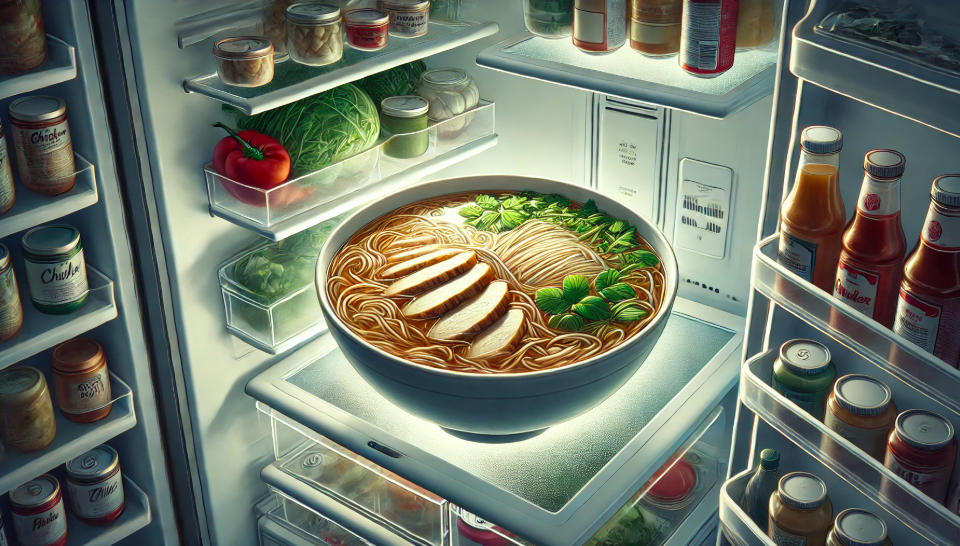
Chicken pho typically lasts 3 to 4 days in the fridge when stored properly in an airtight container. After this period, the quality may degrade, and the risk of spoilage increases, especially due to the broth and fresh ingredients. It’s important to refrigerate the pho within two hours of cooking to ensure food safety. If you're unsure whether it’s still safe to eat, check for signs of spoilage like an off smell, unusual texture, or mold.
How To Properly Store Chicken Pho In The Fridge
To properly store chicken pho in the fridge, it's essential to cool the soup to room temperature before refrigerating to prevent bacterial growth. Once cooled, separate the broth from the toppings, such as noodles, chicken, and herbs. Store the broth in an airtight container, and keep the toppings in separate containers. This helps maintain the freshness and flavor of each component. The broth can be kept in the fridge for up to 3-4 days, while the toppings, especially the noodles and herbs, are best consumed within 1-2 days. When you're ready to eat, reheat the broth until it’s hot, and warm the noodles separately in hot water to preserve their texture. For longer storage, you can freeze the broth in freezer-safe containers, which will keep for up to 3 months. Freezing the toppings, though possible, may affect their texture once thawed.
Can You Freeze Chicken Pho For Longer Storage?
Yes, you can freeze chicken pho for longer storage, but there are some important things to know to ensure the best results.
1. Freezing The Broth
The broth is the main part of pho, and it freezes well. When freezing pho broth, allow it to cool to room temperature before putting it into an airtight container or a freezer bag. If possible, store it in smaller portions, so you can defrost only the amount you need later.
Tip:To prevent the broth from becoming too oily after freezing, you can skim off excess fat before freezing it.
2. Freezing The Chicken
Chicken can also be frozen, but you should separate it from the broth before freezing. You can freeze the chicken on its own in an airtight container or freezer bag. If you’ve already shredded the chicken, you can store it in small portions for easy defrosting.
Tip:If you're freezing cooked chicken in pho, make sure it’s well-cooked and shredded or chopped into smaller pieces for easier use when reheating.
3. Freezing The Noodles And Garnishes
Rice noodles in pho do not freeze well because they tend to become mushy when reheated. For best results, store the noodles separately in the fridge and only cook them fresh when you're ready to serve. Similarly, fresh herbs, bean sprouts, or other garnishes should not be frozen as they will lose texture and flavor.
Reheating Chicken Pho Safely
Reheating chicken pho properly is important to ensure it remains safe to eat and doesn't lose its flavor. Here are the steps to reheat chicken pho safely:
1. Use The Stove
- Heat it slowly: The best way to reheat pho is on the stove. Pour the pho into a pot. Heat it over medium heat, stirring occasionally, until it reaches a boil.
- Bring it to 165°F (74°C): Make sure the soup reaches at least 165°F. This temperature is hot enough to kill any harmful bacteria.
2. Microwave Reheating
- Use a microwave-safe container: Transfer the pho to a microwave-safe bowl.
- Cover the container: This helps to heat the pho evenly and prevents it from drying out.
- Stir and check temperature: Heat it in 1-minute intervals, stirring between each, until the soup is steaming hot and reaches 165°F.
3. Don’t Reheat Multiple Times
- Only reheat once: It’s safest to reheat your chicken pho only once. Reheating it multiple times can cause bacteria to grow, which can make you sick.
- Store leftovers properly: If you’re not eating all of it right away, store the pho in an airtight container in the fridge. Make sure it’s cooled down to room temperature before placing it in the fridge to avoid raising the temperature inside the fridge.
Best Practices To Extend The Shelf Life Of Chicken Pho
To extend the shelf life of chicken pho and keep it safe and fresh, here are some best practices based on reliable food safety guidelines:
1. Proper Cooling
- Cool it quickly: After cooking, allow chicken pho to cool down quickly. This prevents bacteria from growing. You can speed up the cooling process by dividing the pho into smaller portions or using an ice bath.
- Room temperature rule: Do not leave pho at room temperature for more than 2 hours. If the room is warmer (above 90°F/32°C), the time should be reduced to 1 hour.
2.Check For Signs Of Spoilage
- Look for visual changes: If the pho appears cloudy, slimy, or has an off smell, it could be spoiled. Discard it if there’s any doubt about its safety.
- Expiration date: Consume refrigerated pho within 3-4 days for the best quality. If it's frozen, consume it within 2-3 months.
By following these practices, you can help extend the shelf life of your chicken pho while keeping it safe and delicious to eat.
Signs Chicken Pho Has Gone Bad
Chicken pho, like other foods, can go bad if not stored properly or kept for too long. Here are some clear signs that your chicken pho has gone bad, based on food safety guidelines from trusted sources like the U.S. Food and Drug Administration (FDA) and the Centers for Disease Control and Prevention (CDC).
1. Bad Smell
If your chicken pho has a sour, rancid, or off smell, it could be a sign of spoilage. Fresh pho should have a clean, savory aroma. A strange odor is a clear indicator that bacteria may have started to grow, and it should be discarded.
2. Change In Color
If the broth or the chicken has turned an unusual color (e.g., a grayish or greenish tint), this is a sign the food may be spoiled. Fresh chicken pho should have a clear, light golden broth. If the chicken looks slimy or dull, it’s no longer safe to eat.
3. Mold Growth
If you see any mold growing on the surface of the pho or on the chicken, it's a clear sign the food is spoiled. Mold can appear as fuzzy spots in various colors, like white, green, or black. Moldy food should always be discarded.
4. Unusual Texture
If the chicken meat has become slimy or the noodles are mushy or overly soft, it’s an indication that the pho has gone bad. Normally, the texture of the chicken should be firm, and the noodles should be soft but not falling apart.
5. Taste
If the pho tastes off, sour, or strange in any way, it may have spoiled. If you notice any unusual flavors when you taste a small amount, it's best to throw it away. A bad taste is often the result of bacteria growth or fermentation.