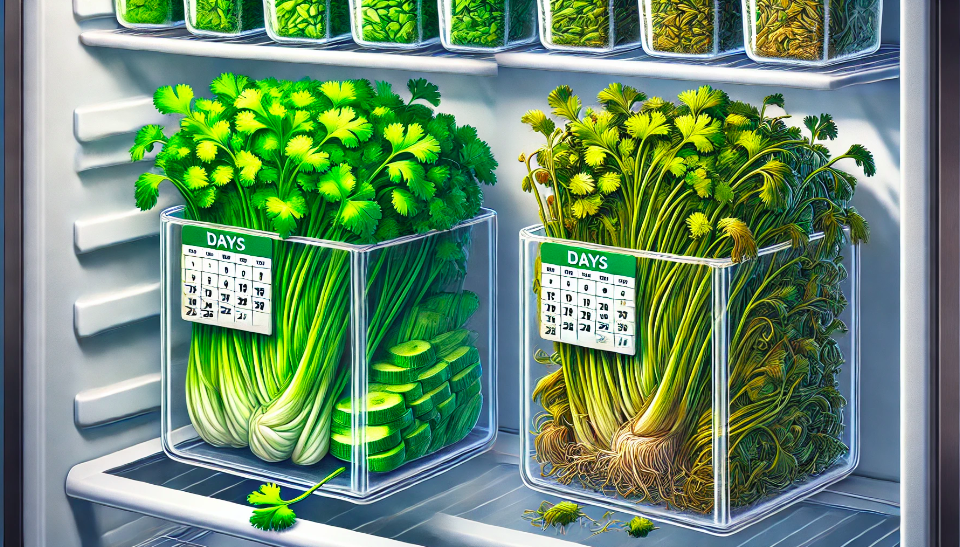
Cilantro can last in the fridge for about 7 to 10 days when stored properly. If cilantro starts turning yellow, wilting, or developing a slimy texture, it is a sign that it has passed its peak freshness. You can also freeze cilantro if you need to keep it for a longer period, although it may lose some of its flavor and texture.
Factors That Affect Cilantro’s Freshness
Here are two factors that affect cilantro's freshness:
- Storage Conditions: Keeping cilantro in a cool environment, like a refrigerator, helps maintain its freshness. Proper storage methods, such as placing the stems in water and covering the leaves with a plastic bag, can extend its shelf life.
- Moisture Levels: Excess moisture can cause cilantro to become slimy and spoil quickly. It's important to store cilantro in a way that controls moisture, preventing it from becoming too wet or too dry
How Long Cilantro Lasts In The Fridge: Fresh Vs. Pre-packaged
Fresh Cilantro:
- Storage Method: To keep fresh cilantro at its best, trim the ends of the stems and place the bunch upright in a jar with about an inch of water, similar to a bouquet of flowers. Loosely cover the leaves with a plastic bag and store it in the refrigerator.
- Shelf Life: When stored this way, fresh cilantro can remain fresh for up to two weeks.
Pre-packaged Cilantro:
- Storage Method: Pre-packaged cilantro often comes in sealed containers. To extend its freshness, keep it in the refrigerator and ensure the packaging remains sealed until you're ready to use it.
- Shelf Life: Pre-packaged cilantro typically stays fresh for about one to two weeks.
Tips For Storing Cilantro To Extend Its Freshness
Here are the tips for storing cilantro with references provided at the end:
- Use a Jar with Water: Trim about an inch off the bottom of the cilantro stems. Place the stems in a jar with enough water to cover them by one or two inches. Cover the leaves loosely with a plastic bag and store the jar in the refrigerator. Change the water every few days to keep the cilantro fresh.
- Wrap in a Damp Paper Towel: Gently wrap the cilantro in a damp (not wet) paper towel. Place the wrapped cilantro inside a resealable plastic bag and store it in the refrigerator. This method helps maintain the right moisture level to keep the cilantro crisp.
- Use an Herb Keeper: Consider using a specialized herb keeper, like the Prepara Herb Savor Eco, which is designed to keep herbs like cilantro fresh for up to three weeks. This container has a water reservoir and a vented lid to maintain proper humidity and airflow
Signs Cilantro Has Gone Bad
Here are five signs that cilantro has gone bad:
- Color Change: Fresh cilantro has bright green leaves. If the leaves turn yellow or brown, it means the cilantro is no longer fresh.
- Wilting: When cilantro wilts, it loses its crispness and becomes limp, indicating it's past its prime.
- Slimy Texture: If the cilantro feels slimy or mushy to the touch, it has spoiled and should not be consumed.
- Off-Putting Smell: Fresh cilantro has a pleasant, citrusy aroma. A sour or unpleasant odor means the cilantro has gone bad.
Best Practices For Using Leftover Cilantro
Here are the best practices for using leftover cilantro, with references included at the end:
Proper Storage to Extend Freshness
- Refrigeration Method: Trim about an inch off the stems of fresh cilantro. Place the stems in a jar with enough water to cover them. Cover the leaves loosely with a plastic bag and store the jar in the refrigerator. Change the water every few days to keep the cilantro fresh for up to two weeks.
- Airtight Container Method: Wrap unwashed cilantro in a clean paper towel to absorb excess moisture. Place it in an airtight container and store it in the refrigerator. This method can keep cilantro fresh for up to a week.
Freezing Cilantro for Long-Term Use
- Whole Leaves: Rinse and thoroughly dry the cilantro. Place the whole leaves in a freezer-safe bag or container. Frozen cilantro can be used directly in cooked dishes like soups and stews.
- Chopped Cilantro Cubes: Chop the cilantro and place it in ice cube trays. Fill each compartment with water or olive oil and freeze. Once frozen, transfer the cubes to a freezer-safe bag. These cubes are convenient for adding to sauces, soups, or stews.
Drying Cilantro for Storage
Air Drying:Tie the cilantro stems together and hang them upside down in a warm, dry place away from direct sunlight. Once dried, crumble the leaves and store them in an airtight container. Dried cilantro is suitable for use in cooked dishes but may not retain the same flavor as fresh cilantro.