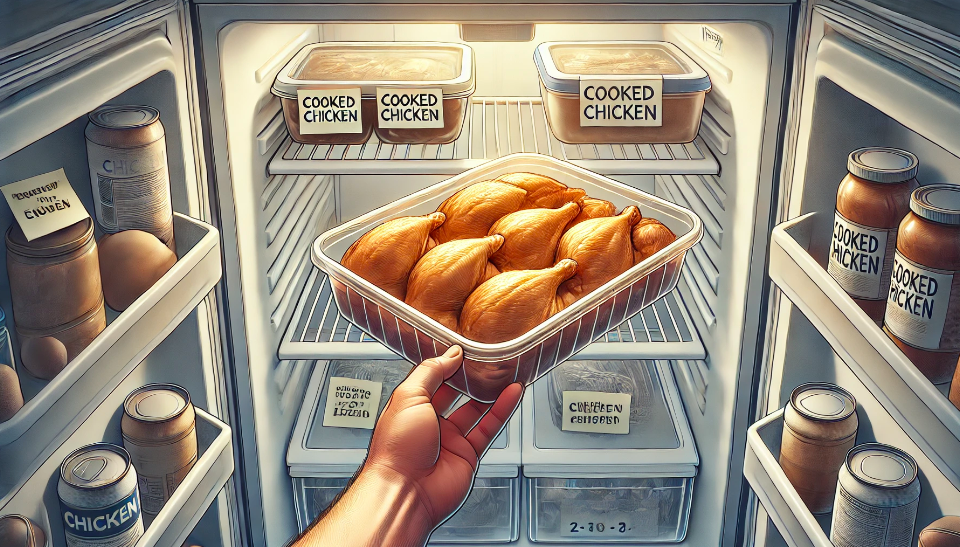
Ideal Refrigeration Time for Cooked Chicken
To keep cooked chicken safe and tasty, it's important to store it in the refrigerator promptly after cooking. Ideally, you should refrigerate cooked chicken within two hours of cooking to prevent bacteria growth. If the ambient temperature is very high, say above 90°F, it's safer to refrigerate within one hour.
Once in the refrigerator, cooked chicken can be safely stored for 3 to 4 days. If you won't be eating the refrigerated chicken within this time frame, it's best to freeze it. Cooked chicken can be frozen for longer shelf life, extending up to 4 months while maintaining optimal quality.
Always store cooked chicken in airtight containers or tightly wrapped to prevent contamination and to preserve moisture
Signs That Cooked Chicken Has Gone Bad
To determine if cooked chicken has gone bad, you can check a few key signs. First, the smell of the chicken is a strong indicator. If the chicken has an offensive or sour smell, it's likely spoiled. Another sign is the color; fresh cooked chicken is usually white or brown, but if it turns gray or green-gray, it's no longer good to eat. Additionally, the texture of the chicken can tell you a lot; if it's slimy or sticky after cooking, this is a sign of spoilage. You might also see mold or white spots, which are clear indications that the chicken should not be consumed.
Proper Storage Tips For Cooked Chicken In The Fridge
To store cooked chicken in the fridge safely and maintain its quality, follow these simple guidelines:
- Temperature and Timing: Cooked chicken should be stored in the refrigerator at a consistent temperature below 40°F (4°C) and consumed within 3 to 4 days to prevent bacterial growth and spoilage.
- Airtight Containers: Use airtight containers or sealable bags to store the cooked chicken. This reduces air exposure and helps prevent the chicken from drying out or absorbing odors from other foods.
- Labeling: It's a good practice to label your containers with the date you stored the chicken. This helps keep track of how long the chicken has been in the fridge and ensures it is used within a safe timeframe.
- Placement in Fridge: Store cooked chicken on the middle shelves of the refrigerator rather than in the door, where temperatures can fluctuate more, affecting its freshness.
How To Reheat Cooked Chicken Safely
- Oven Method: Preheat your oven to 350°F (around 177°C). Place the chicken in a baking dish and add a little chicken broth or water to prevent it from drying out. You can cover the dish with aluminum foil to keep in the moisture. Reheat the chicken for about 15-20 minutes or until it reaches an internal temperature of 165°F (74°C). This temperature is crucial to ensure that any harmful bacteria are killed.
- Microwave Method: For a quicker option, you can use the microwave. Place the chicken on a microwave-safe dish and sprinkle a bit of water or broth over it to keep it moist. Cover the dish with a microwave-safe lid or plastic wrap, leaving a small vent for steam to escape. Heat on high until the chicken reaches 165°F, usually for about 1-2 minutes depending on the amount and size of the chicken pieces.
- Stovetop Method: If you're reheating smaller cuts or shredded chicken, the stovetop can work well. Add a small amount of oil or broth to a skillet over medium heat. Place the chicken in the skillet and cover it with a lid. Heat until the chicken is warmed through, which should take about 5-7 minutes. Ensure the chicken reaches the safe internal temperature of 165°F.
- Air Fryer Method: If you have an air fryer, you can reheat chicken to achieve a crispy exterior. Preheat the air fryer to about 350°F (177°C). Place the chicken in the basket without overcrowding and heat for about 3-4 minutes on each side, or until it reaches the desired temperature.
Health Risks Of Consuming Spoiled Cooked Chicken
Eating spoiled cooked chicken can lead to food poisoning due to harmful bacteria such as Salmonella, Campylobacter, and Clostridium perfringens. These bacteria can cause a range of uncomfortable symptoms, including nausea, vomiting, diarrhea, and abdominal cramps. The severity of these symptoms can vary depending on the amount of contaminated chicken consumed and individual health factors. In some cases, food poisoning from bad chicken can result in severe health issues requiring medical attention.
Freezing Cooked Chicken For Extended Shelf Life
You can definitely freeze cooked chicken to extend its shelf life. Here's a straightforward guide on how to do it effectively:
- Cooling: Let the cooked chicken cool completely before freezing. This prevents the freezer's temperature from increasing, which could affect other stored foods.
- Portioning: Divide the chicken into meal-sized portions. This helps in thawing only the amount you need later, reducing waste.
- When you're ready to use the frozen chicken, the safest way to thaw it is in the refrigerator overnight. If you're in a hurry, you can also use the microwave's defrost setting or thaw it in cold water, changing the water every 30 minutes, but be sure to cook it immediately after thawing to prevent any bacterial growth.