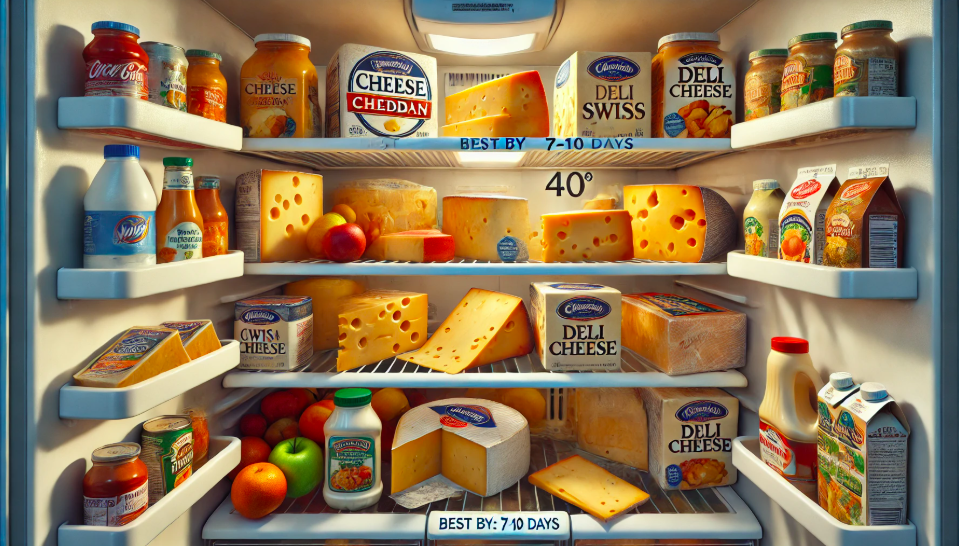
Deli cheese typically lasts between 1 to 3 weeks in the fridge, depending on the type and how fresh it was when purchased. Freshly sliced deli cheese will usually stay good for about 1 to 2 weeks, while pre-packaged deli cheese may last a bit longer.
To extend its freshness, it's important to store the cheese properly by wrapping it tightly in wax paper, parchment paper, or plastic wrap, and then placing it in an airtight container or resealable plastic bag. This helps protect the cheese from air exposure, which can cause it to dry out or spoil more quickly.
Hard cheeses, like cheddar or Swiss, generally last longer than softer cheeses such as mozzarella or brie. Always check for signs of spoilage like an off smell, mold, or a slimy texture. It’s also a good idea to refer to the “sell by” or “use by” dates on the packaging as a guideline. For the best quality and safety, try to consume deli cheese within 1-2 weeks of purchase.
Factors That Affect The Shelf Life Of Deli Cheese
The shelf life of deli cheese can be influenced by several factors. These include the type of cheese, storage conditions, and how it is handled. Here are the main factors that affect the shelf life of deli cheese:
1. Type Of Cheese
Different types of deli cheese have different shelf lives. Soft cheeses like cream cheese or brie tend to spoil faster than harder cheeses like cheddar or Swiss. This is because softer cheeses have more moisture, which creates a better environment for bacteria to grow. Hard cheeses are drier and have less moisture, which helps them last longer.
2. Storage Temperature
Cheese should always be kept at a consistent, cold temperature. The ideal storage temperature for deli cheese is between 34°F and 40°F (1°C and 4°C). If the cheese is stored at a higher temperature, bacteria and mold can grow quickly, reducing its shelf life. Keeping it in the fridge and in an airtight container can help preserve its freshness.
3. Packaging
The way deli cheese is packaged can impact how long it stays fresh. Cheese that is sold in vacuum-sealed packages generally lasts longer because it is kept free from air, which helps slow down spoilage. If the cheese is unwrapped or has been exposed to air, it will spoil more quickly. Always re-wrap any leftover cheese tightly in wax paper, plastic wrap, or aluminum foil.
4. Exposure To Air
Oxygen promotes the growth of bacteria and mold on cheese. When deli cheese is exposed to air, it dries out and can develop an off taste and texture. Keeping it sealed properly can help maintain its quality.
5. Moisture Content
Deli cheese with higher moisture content, like mozzarella or fresh ricotta, has a shorter shelf life compared to dry cheeses like parmesan. Higher moisture levels create an environment for bacteria and mold to grow faster, leading to quicker spoilage.
6. Handling And Hygiene
How deli cheese is handled can also affect its shelf life. If you touch the cheese with dirty hands or use unclean utensils, bacteria can be transferred to the surface, which can cause it to spoil faster. Always use clean hands and utensils when handling cheese to prevent contamination.
7. Age Of The Cheese
The freshness of the cheese when you buy it also plays a role. Cheese that is closer to its expiration date will not last as long, even with proper storage. Always check the expiration date and try to consume the cheese before it gets too close to this date.
By paying attention to these factors, you can help extend the shelf life of your deli cheese and ensure it stays fresh longer.
Signs That Deli Cheese Has Gone Bad
Here are the signs that deli cheese has gone bad, based on reliable sources like food safety experts and the USDA:
1. Smell
If your deli cheese smells sour or off, it's likely gone bad. Cheese should have a fresh, milky smell. A strong or unpleasant odor is a sign of spoilage.
2. Change In Texture
If the cheese feels slimy or too dry, it may be bad. Good deli cheese should feel firm but smooth. If it starts to get mushy or sticky, it’s a sign to throw it away.
3. Color Change
If you notice any discoloration, such as mold or spots that weren't there before, this can indicate that the cheese has spoiled. Some cheeses may have natural mold, but if it spreads or looks unusual, it's time to discard it.
4. Off Taste
If you taste the cheese and it’s sour or off in flavor, it has likely gone bad. Deli cheese should taste creamy or savory, depending on the type.
5. Excessive Moisture Or Dryness
If the cheese has excessive moisture or is very dry (for instance, the surface looks cracked or wrinkled), it's not fresh anymore. This could happen due to improper storage.
6. Visible Mold
Even though some cheeses naturally have mold, if you see mold that doesn’t belong or the cheese isn’t supposed to have mold (like cheddar or American cheese), discard it. Mold can spread quickly in cheese.
7. Expiration Date
Always check the expiration date on deli cheese. If the cheese is past this date, it’s more likely to be unsafe to eat.
If you notice any of these signs, it's best to throw away the cheese to avoid the risk of foodborne illness.
Best Practices For Storing Deli Cheese In The Fridge
To store deli cheese properly in the fridge, follow these best practices:
- Keep It Wrapped: Store deli cheese in its original packaging or wrap it tightly in wax paper, parchment paper, or plastic wrap. This helps keep it fresh and prevents it from drying out.
- Use an Airtight Container: If the cheese is already opened, place it in an airtight container to protect it from moisture and strong odors from other foods in the fridge.
- Store in the Right Spot: Place the cheese in the main part of the fridge, not in the door, as temperature fluctuates there.
- Keep it Cool: Store cheese at a temperature between 34°F and 40°F (1°C - 4°C) to keep it fresh for longer.
- Don't Slice Too Early: Slice cheese only when you’re ready to use it. Slicing exposes more surface area to air, which can lead to faster spoilage.
- Check Expiry Dates: Always check the expiration date on the label and try to use the cheese before it passes.
Can Deli Cheese Be Frozen For Longer Storage?
Yes, deli cheese can be frozen for longer storage, but it’s important to know that freezing may affect its texture and flavor. Here’s how to do it properly:
Freezing Deli Cheese:
1. Choose the Right Cheese: Semi-soft and hard cheeses freeze better than soft cheeses like cream cheese or ricotta. Deli cheeses such as Swiss, cheddar, and turkey or ham slices freeze well, while cheeses with higher moisture content may become crumbly when thawed.
2. Wrap It Well: To prevent freezer burn and preserve the quality of the cheese, wrap it tightly in plastic wrap or wax paper, and then place it in a freezer-safe bag or airtight container. This helps protect the cheese from the cold air and moisture in the freezer.
3. Label and Date: Mark the packaging with the date you froze the cheese. It’s best to use frozen deli cheese within 1 to 2 months for the best quality.
4. Thawing: When you're ready to use the frozen deli cheese, thaw it in the refrigerator overnight. Do not thaw it at room temperature, as this could affect its texture and taste.
Effects Of Freezing Deli Cheese:
- Texture: Freezing can cause deli cheese to become crumbly or dry when thawed. This change is more noticeable in soft cheeses than in harder varieties.
- Flavor: While freezing may slightly dull the flavor of deli cheese, it usually remains safe to eat and can still be used in cooking or melted into dishes like sandwiches or casseroles.
How To Tell If Pre-Sliced Deli Cheese Has Spoiled
To tell if pre-sliced deli cheese has spoiled, you can look for a few key signs. Here's what to check:
Check The Expiration Date
The easiest way to start is by looking at the expiration date on the packaging. If it’s past that date, the cheese might not be safe to eat, but this isn't always a clear sign on its own.
Look For Mold
If you see mold on the cheese, it’s a clear sign that it has spoiled. Deli cheese should not have any fuzzy patches or green, blue, or white spots. If you spot mold, throw the cheese away.
Smell The Cheese
Fresh deli cheese should have a mild smell, but if it has an off or sour odor, it’s likely gone bad. A strong, unpleasant smell is one of the clearest signs that the cheese has spoiled.
Feel The Texture
If the cheese feels slimy, sticky, or unusually dry, it may have spoiled. Fresh deli cheese should feel smooth and firm. A sticky or slimy texture means it's no longer good to eat.
Taste A Small Bit
If everything else seems okay but you’re still unsure, you can try a small piece of the cheese. Spoiled cheese will taste sour or off. If it doesn’t taste right, spit it out and discard the rest.
Look For Discoloration
Deli cheese that has turned a yellow, brown, or dull color might be going bad. While some cheeses can naturally change color over time, a significant change in color can be a sign of spoilage.
How To Extend The Shelf Life Of Deli Cheese In The Fridge
To extend the shelf life of deli cheese in the fridge, you can follow these simple steps:
Store It In An Airtight Container
If your deli cheese is not in its original packaging, transfer it to an airtight container. This will help protect it from air, which can cause the cheese to dry out or spoil faster.
Wrap It Properly
If you bought sliced deli cheese, wrap it tightly in wax paper, parchment paper, or plastic wrap before storing it in the fridge. This helps keep moisture in and prevents it from drying out. Avoid using regular plastic bags as they can trap moisture and promote mold growth.
Keep It In The Coldest Part Of The Fridge
Store deli cheese on the middle or lower shelves of the fridge, where the temperature is most consistent and cold. The door is not the best place for cheese, as it’s often too warm due to frequent opening and closing.
Keep It Wrapped Until Use
When you take out slices of deli cheese, try to keep the rest of the cheese wrapped until you need it. This helps reduce exposure to air and keeps it fresh longer.
Avoid Cross-Contamination
Don’t let deli cheese come into contact with other foods that could contaminate it, such as raw meats or vegetables. Use a clean knife to cut slices and avoid touching the cheese with dirty hands.
Use A Cheese Drawer
Some fridges have a special cheese or deli drawer. These drawers often have the right temperature and humidity to keep cheese fresh longer. If your fridge has one, use it to store your deli cheese.
Check For Expiration Dates
Be mindful of the cheese’s expiration date, and try to use it before that date. If you’ve opened a pack, aim to finish it within 3–5 days for the best quality and taste.
By following these simple steps, you can help deli cheese stay fresh longer in the fridge, reducing waste and making it last until you’re ready to enjoy it.
What Happens If You Eat Expired Deli Cheese?
Eating expired deli cheese can cause a few different problems, depending on how far past the expiration date it is and how it’s been stored. Here's what can happen:
Food Poisoning
Expired deli cheese can develop harmful bacteria like Listeria or Salmonella, which can make you sick. Symptoms of food poisoning may include stomach cramps, vomiting, diarrhea, and fever. This is more likely to happen if the cheese has been stored improperly or is significantly past its expiration date.
Upset Stomach Or Digestion Issues
Even if you don’t get full-blown food poisoning, eating expired cheese can lead to an upset stomach. This can include bloating, gas, or indigestion. This happens because bacteria in the cheese can begin to break it down in unhealthy ways.
Mold Or Spoiled Taste
If the cheese has mold or a bad smell, it may taste sour or unpleasant. While some mold is harmless on certain cheeses, deli cheese is often pre-sliced and more prone to spoilage. Eating cheese with mold could cause stomach discomfort, though some people may react to mold more than others.
Increased Risk For Vulnerable Groups
Pregnant women, older adults, young children, and people with weakened immune systems are more likely to experience serious health problems from eating expired deli cheese. In these cases, it’s better to avoid eating any expired or questionable cheese, even if it doesn’t seem very bad.
Changes In Taste And Texture
Even if expired deli cheese doesn’t make you sick right away, it might just taste bad or feel slimy. These changes aren’t harmful in themselves but can make the cheese unappetizing or unpleasant to eat.
What To Do If You Accidentally Eat Expired Deli Cheese:
If you realize you’ve eaten expired deli cheese and start feeling sick, it’s a good idea to drink plenty of water and rest. If symptoms get worse or you feel very unwell, seek medical help. Food poisoning symptoms can vary in severity, but most people recover with rest and hydration.
In short, while eating expired deli cheese doesn’t always result in illness, it can lead to digestive problems, food poisoning, or unpleasant changes in taste. Always check the cheese for signs of spoilage before eating it, and when in doubt, it’s safer to throw it out.
Conclusion: Properly Storing Deli Cheese For Optimal Freshness
To keep deli cheese fresh, it’s important to store it properly. Always wrap it tightly in wax paper, parchment paper, or plastic wrap, and place it in an airtight container or resealable bag. This helps prevent it from drying out or absorbing unwanted odors. Store deli cheese in the coldest part of the fridge, not in the door, as temperatures fluctuate there. It’s best to use the cheese within a week for the best flavor and texture. Lastly, if the cheese starts to develop mold or a strong odor, it’s time to discard it to avoid health risks.