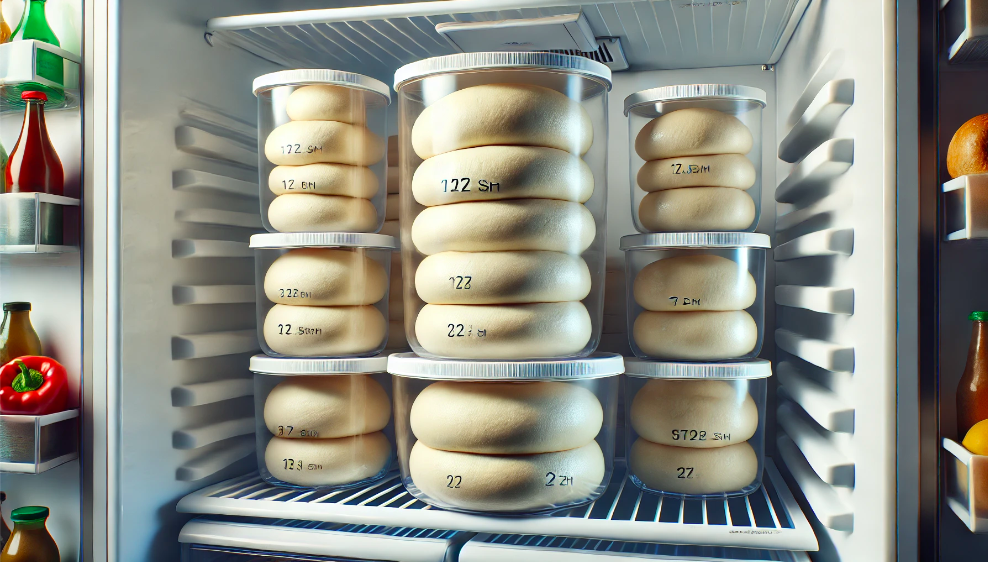
Dough can last in the fridge for 3 to 5 days, depending on the type of dough and how it is stored. Proper storage in an airtight container or wrapped tightly in plastic wrap helps preserve its quality. Dough with perishable ingredients like dairy may have a shorter shelf life. Always check for signs of spoilage, such as a sour smell, discoloration, or mold, before using refrigerated dough
Understanding Dough Shelf Life in the Fridge
1. Yeast-Based Doughs
- These can typically last up to 5 days in the fridge. However, the sooner you use them, the better the quality.
- Yeast activity slows down in the cold but doesn’t stop, so the dough may over-ferment if left too long.
2. Non-Yeast Doughs
- These last about 2-3 days in the refrigerator.
- Without yeast, spoilage is more likely to occur due to the growth of bacteria or mold.
3.Dough with Dairy or Eggs
If the dough includes milk, eggs, or other perishable ingredients, it spoils faster and should be used within 1-2 days.
Factors That Affect Dough Longevity
The longevity of dough is influenced by several key factors:
- Type of Flour: Whole grain flours contain more oils, which can spoil faster, leading to a shorter shelf life for the dough. In contrast, all-purpose flour has fewer oils, allowing the dough to last longer.
- Moisture Content: Doughs with higher moisture levels are more prone to bacterial growth and spoilage. Maintaining appropriate hydration is essential to extend dough longevity.
- Yeast Activity: The amount of yeast in the dough affects its fermentation rate. More yeast leads to quicker fermentation, which can shorten the dough's usable period.
- Storage Temperature: Higher temperatures accelerate chemical reactions and microbial growth, reducing dough shelf life. Storing dough in a cool environment, like a refrigerator, slows these processes and helps preserve it longer.
- Presence of Fats and Sugars: Doughs rich in fats or sugars tend to have a shorter shelf life due to their impact on fermentation and potential to attract microbes.
Signs Your Dough Has Gone Bad
- Unpleasant SmellFresh dough should have a mild, yeasty smell. If it has a sour, rancid, or off-putting odor, this could mean it’s spoiled due to bacterial overgrowth or improper fermentation.
- Visible MoldIf you see any green, black, or white mold spots, the dough is not safe to use. Mold can spread throughout the dough even if it appears in small amounts.
- Color ChangesDough should maintain its natural color, usually white or beige. If it turns gray or develops darker patches, this indicates spoilage or mold growth.
- Texture ChangesSpoiled dough may feel unusually sticky, slimy, or develop a hard and crusty layer on the surface. This happens due to bacterial activity or dehydration.
Best Practices for Maximizing Dough Freshness.
Thawing Frozen Dough:
Transfer the frozen dough to the refrigerator and let it thaw overnight. Once thawed, allow it to come to room temperature before shaping and baking.
Adjusting Recipes for Freezing:
When planning to freeze dough, consider increasing the yeast slightly to help with rising after thawing. For example, add an extra 1/4 to 1/2 teaspoon of yeast per 3 cups of flour.