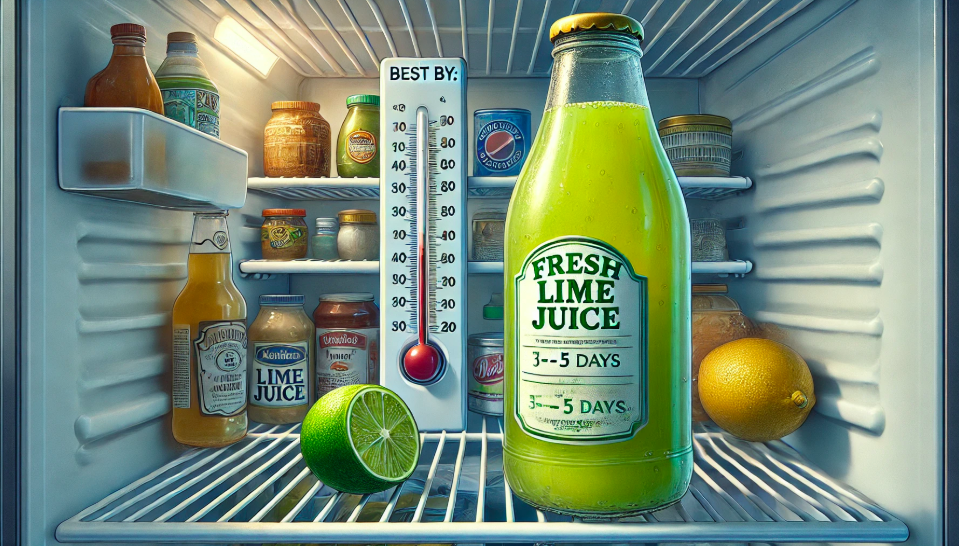
Freshly squeezed lime juice can be stored in the refrigerator for up to 2 to 3 days before it starts to lose its flavor and freshness. To maintain its quality, keep the juice in an airtight container and refrigerate it promptly after squeezing. For longer storage, consider freezing the juice in ice cube trays; once frozen, transfer the cubes to a freezer-safe bag or container. This method allows you to preserve the juice for up to four months.
Factors That Affect The Shelf Life Of Fresh Lime Juice
The shelf life of fresh lime juice is influenced by several key factors:
- Quality of Limes: Using fresh, ripe limes ensures better juice quality and longevity. Overripe or damaged limes can shorten the juice's shelf life.
- Extraction Method: Juice extracted under hygienic conditions and immediately refrigerated lasts longer. Exposure to contaminants during extraction can lead to quicker spoilage.
- Storage Conditions: Storing lime juice in a clean, airtight container minimizes exposure to air and contaminants, preserving its freshness. Proper refrigeration is essential to slow down spoilage.
- Temperature: Keeping lime juice at consistent, low temperatures (ideally between 33°F and 40°F or 0°C to 4°C) slows bacterial growth and oxidation, extending its shelf life.
- Exposure to Light: Light can cause oxidation, leading to a loss of flavor and nutrients. Storing lime juice in opaque or dark containers helps protect it from light exposure.
- Air Exposure: Contact with air can lead to oxidation, affecting the juice's taste and quality. Using airtight containers reduces air exposure and helps maintain freshness.
- Acidity Level: Lime juice's natural acidity acts as a preservative, inhibiting bacterial growth. However, dilution or mixing with other substances can alter its pH, potentially reducing its shelf life.
By considering these factors, you can effectively extend the freshness and usability of fresh lime juice.
Proper Storage Techniques For Fresh Lime Juice
To keep fresh lime juice at its best, follow these storage tips:
- Use an Airtight Container: Store the juice in a clean, airtight container to prevent air exposure, which can lead to spoilage.
- Refrigerate Promptly: Place the sealed container in the refrigerator immediately after juicing. Fresh lime juice typically stays fresh for about 7 to 10 days when refrigerated.
- Freeze for Longer Storage: For extended preservation, pour the juice into ice cube trays and freeze. Once frozen, transfer the cubes to a freezer-safe bag or container. Frozen lime juice can last up to six months.
- Label and Date: Always label containers with the date of juicing to monitor freshness and ensure timely use.
Signs That Fresh Lime Juice Has Gone Bad
To determine if fresh lime juice has spoiled, look for the following signs:
- - Color Change: Fresh lime juice is typically clear and pale yellow. If it becomes cloudy, discolored, or develops a brownish hue, it may be spoiled. citeturn0search0
- - Sediment: The presence of sediment at the bottom of the container can indicate spoilage, possibly due to mold or yeast growth.
- - Smell: Fresh lime juice has a bright, citrusy aroma. A sour, fermented, or off-putting odor suggests it has gone bad.
- - Taste: If the juice tastes sour, bitter, or has a fermented flavor, it's a sign of spoilage.
- - Mold Growth: Any visible mold indicates that the juice is no longer safe to consume.
If you notice any of these signs, it's best to discard the lime juice to avoid potential health risks.
Can Freezing Extend The Life Of Lime Juice?
Freezing lime juice can indeed extend its shelf life. Fresh lime juice typically lasts about 2 to 3 days in the fridge before it starts to lose flavor or spoil. However, if you freeze lime juice, it can last for up to 4 to 6 months without significant loss of quality.
When freezing lime juice, it is best to store it in an airtight container or ice cube trays. You can pour the juice into the tray, freeze it, and then transfer the cubes to a sealed bag or container. This method allows you to use smaller portions of lime juice as needed.
After thawing, the lime juice may lose some of its fresh taste, but it can still be used for cooking, baking, or in drinks where the change in flavor is less noticeable. It's also a good idea to freeze the juice shortly after squeezing it to preserve the best flavor.
Comparing Fresh Lime Juice Shelf Life To Bottled Lime Juice
Fresh lime juice and bottled lime juice have different shelf lives due to how they are prepared and stored. Here's a simple breakdown:
Fresh Lime Juice Shelf Life:
Fresh lime juice is extracted directly from the fruit and doesn't contain preservatives. Its shelf life is shorter compared to bottled lime juice. When stored in the fridge, fresh lime juice can last 2 to 3 days before it starts to lose its freshness and flavor. After that, it may begin to taste bitter or sour, and its color might change.
Bottled Lime Juice Shelf Life:
Bottled lime juice, which is often found in stores, has a longer shelf life because it is typically pasteurized or contains preservatives to prevent spoilage. Depending on the brand, bottled lime juice can last up to 6 months when kept unopened in a cool, dry place.
Once opened, bottled lime juice lasts about 2 to 3 weeks in the refrigerator. While it may last longer, the flavor can gradually weaken after a few weeks.
Storage tip:
After opening, keep bottled lime juice tightly sealed in the fridge to maintain its quality.
Key Differences:
- Fresh lime juice has a shorter shelf life of about 2-3 days in the fridge.
- Bottled lime juice lasts much longer, especially when unopened (up to 6 months), and can last about 2-3 weeks once opened.
- Fresh lime juice offers a fresher, more vibrant flavor, while bottled lime juice may have a slightly less intense taste due to pasteurization.
Common Mistakes To Avoid When Storing Lime Juice
Here are some common mistakes to avoid when storing lime juice:
1. Storing Lime Juice At Room Temperature
One of the biggest mistakes is leaving lime juice out at room temperature. Lime juice, whether fresh or squeezed, can spoil quickly if not kept in the fridge. Always refrigerate lime juice to preserve its freshness and flavor.
2. Not Using An Airtight Container
Lime juice is sensitive to air and light, which can cause it to lose its flavor and nutrients. Storing lime juice in a container that is not airtight can lead to oxidation. Always use an airtight container to keep the juice fresh for longer.
3. Not Using Fresh Lime Juice
Using lime juice that has been sitting out for too long or using juice that has already been opened can lead to a less fresh taste. Freshly squeezed lime juice should be used within a day or two for the best flavor. If you need to store it for longer, consider freezing it.
4. Storing Lime Juice With Seeds
Some people leave the seeds in when storing lime juice. Seeds can release bitterness into the juice over time. It's better to strain out the seeds before storing lime juice.
5. Freezing Lime Juice In Large Quantities
While freezing lime juice is a good idea for long-term storage, freezing it in large quantities can make it difficult to thaw and use only what you need. It's best to freeze lime juice in smaller portions, such as ice cube trays or small containers, for easier use later.
6. Not Labeling The Storage Date
Lime juice can last for only a short period before it starts to lose its quality. If you're freezing or refrigerating lime juice, always label the container with the date you stored it. This helps ensure you're using it within its best-use timeframe.
7. Exposing Lime Juice To Direct Sunlight
Even in the fridge, lime juice should be kept away from direct light. Prolonged exposure to light can degrade the quality of the juice. Store lime juice in a dark, cool part of the fridge.
By avoiding these mistakes, you can keep your lime juice fresh for longer, maintaining its taste and quality.
Tips For Using Leftover Fresh Lime Juice Before It Expires
Here are some practical tips for using leftover fresh lime juice before it expires, based on trusted sources:
1. Store It Properly
- Refrigerate: Fresh lime juice can last for 3–4 days in the fridge. Keep it in an airtight container to prevent it from absorbing any odors or losing its freshness.
- Freeze for Longer Use: If you have more lime juice than you can use in a few days, freeze it! You can freeze it in ice cube trays. Once frozen, transfer the cubes to a zip-top bag. This way, you can easily use a cube whenever needed.
2. Use In Drinks
Lime juice can be added to a variety of drinks, both alcoholic and non-alcoholic. Try it in cocktails like margaritas, mojitos, or in a refreshing lime soda. It also works well in water to add a zesty flavor.
3. Add To Salad Dressings
Fresh lime juice makes a great base for tangy salad dressings. Combine it with olive oil, salt, pepper, and some honey or mustard for a simple, tasty dressing.
4. Marinades For Meat Or Tofu
Lime juice works well as a marinade for chicken, fish, beef, or tofu. It helps tenderize the meat and adds a fresh, citrusy flavor. Add some garlic, herbs, and oil for a flavorful marinade.
5. Make Lime Sorbet Or Ice Cream
If you enjoy homemade desserts, use leftover lime juice to make sorbet or lime-flavored ice cream. The acidity and fresh flavor will give your treats a bright and refreshing taste.
6. Bake With It
Lime juice can be used in baking, especially in recipes like lime cakes, lime pies, or cookies. It adds a tangy, refreshing flavor to sweets and pairs well with coconut and other tropical flavors.
7. Use In Sauces And Soups
Lime juice can brighten up many savory dishes. Add it to sauces, soups, or salsas to balance out the flavors. A squeeze of lime in a bowl of soup can provide a fresh, tangy finish.
8. Smoothies And Juices
Add lime juice to smoothies or juices for an extra burst of flavor. Lime pairs well with tropical fruits like pineapple, mango, and coconut, creating a refreshing drink.