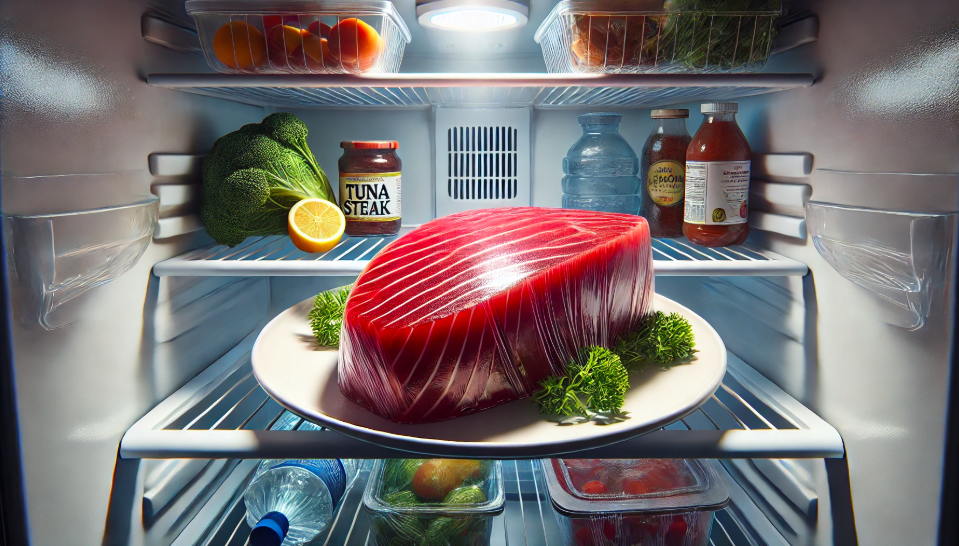
Fresh tuna can typically last 1-2 days in the refrigerator if stored properly. To keep tuna at its best quality, it must be stored at a consistently cold temperature, ideally below 40°F (4°C). After purchasing fresh tuna, it’s essential to refrigerate it as soon as possible. Tuna has a delicate texture and flavor that can degrade quickly if it’s left at room temperature or stored improperly.
For optimal quality, tuna should be kept in the coldest part of your fridge, usually near the back or on a plate over ice. If you know you won’t be able to consume it within 1-2 days, freezing is an option, though the quality may decline slightly once thawed. While fresh tuna can be safe to eat a bit longer if kept chilled, it’s always best to use it quickly to ensure the best taste and texture.
Factors Affecting Fresh Tuna’s Shelf Life
- Storage Temperature: Proper storage temperature is crucial for maximizing the shelf life of fresh tuna. The ideal refrigerator temperature for storing fresh seafood, including tuna, is 40°F (4°C) or lower. If tuna is kept above this temperature for extended periods, bacteria growth increases, and the fish deteriorates faster.
- Packaging: Proper packaging helps protect fresh tuna from exposure to air and moisture, which can speed up spoilage. When buying fresh tuna, it should ideally be packed in plastic wrap or placed in a vacuum-sealed bag. If you’re storing it at home, you can use plastic wrap, aluminum foil, or an airtight container to seal it.
- Handling: How the tuna is handled from purchase to storage has a big impact on how long it will last. For instance, if the tuna is left sitting out at room temperature for too long, bacteria can multiply quickly, causing it to spoil.
Signs Of Spoiled Fresh Tuna
- Odor: One of the clearest signs that fresh tuna has spoiled is its smell. Fresh tuna should have a clean, ocean-like aroma, without any strong or sour odors. If the tuna starts to smell overly fishy or rancid, it has begun to spoil. A sour, ammonia-like odor is a red flag that the fish is no longer safe to eat and should be discarded immediately.
- Color: Fresh tuna is known for its vibrant, reddish-pink color. If the tuna begins to lose its bright hue and turns brownish, grey, or dull, this indicates that the fish is starting to degrade. Some discoloration may be normal over time, but significant changes in color suggest that the tuna has passed its prime and may not be safe to eat.
- Texture: Fresh tuna should have a firm, moist texture. If the tuna feels slimy, mushy, or overly soft, it’s a sign that the fish has spoiled. The surface of the tuna should feel clean and dry without any sticky residue. If the flesh starts to fall apart easily or looks dried out, discard it.
Best Practices For Storing Fresh Tuna
- Refrigeration: To keep fresh tuna at its best, store it in the coldest part of the refrigerator. Ideally, this is at or near the back of the fridge where the temperature remains steady and cold. Using a thermometer to monitor the temperature can help ensure that the tuna stays fresh. You can also store tuna on a plate with ice underneath it, especially if you need to keep it for more than a few hours. This helps maintain a consistently low temperature, which is crucial for the freshness of the fish.
- Airtight Sealing: Sealing fresh tuna tightly is essential to preventing air from reaching the fish. Oxygen can cause tuna to oxidize, which affects its taste and can lead to spoilage. Wrapping the tuna in plastic wrap or aluminum foil and placing it in an airtight container or resealable bag will protect it from exposure to air. If you are using a container, make sure it is tightly closed. This prevents moisture from escaping and ensures the tuna stays as fresh as possible.
- Avoid Cross-Contamination: It’s important to store tuna separately from other food items, particularly foods that are ready to eat, like fruits and vegetables. Raw seafood can transfer bacteria to other foods, so keeping it in a separate, sealed area of the fridge is recommended. If you need to store multiple items in the same space, use separate containers or bags to keep the tuna isolated.
How To Properly Wrap And Seal Fresh Tuna For Longevity
- Drying: Before wrapping fresh tuna, pat it dry with paper towels to remove any excess moisture. This helps prevent the growth of bacteria and reduces the risk of the fish becoming soggy or slimy. Excess moisture can also cause the tuna to deteriorate more quickly, so it’s essential to keep it as dry as possible.
- Wrapping: After drying, tightly wrap the tuna in plastic wrap or aluminum foil. Ensure there are no air pockets between the tuna and the wrap, as air exposure can cause it to spoil. Be sure that the wrap covers the fish completely and securely, leaving no open edges where air can get in. Wrapping the tuna this way helps retain its natural moisture while protecting it from contaminants.
- Sealing: For added protection, place the wrapped tuna in a resealable plastic bag or airtight container. A vacuum-sealed bag is ideal, as it removes all air from around the tuna, extending its shelf life even further. Make sure the seal is tight and that there’s no space where air could enter. This will help the tuna stay fresh for a longer time.
Can You Freeze Fresh Tuna For Longer Storage?
Yes, freezing is an excellent option for extending the shelf life of fresh tuna. If you can’t consume the tuna within the 1-2 day window that it stays fresh in the refrigerator, freezing is a good alternative. When properly frozen, tuna can remain at its best quality for up to 2-3 months. After this period, the quality may decline, and the fish may start to lose its texture and flavor.
To freeze fresh tuna, wrap it tightly in plastic wrap, aluminum foil, or vacuum-sealed bags to prevent freezer burn. It’s essential to remove as much air as possible to prevent the formation of ice crystals that could damage the fish. Label the frozen tuna with the date it was stored, so you know how long it has been frozen. When ready to use, thaw the tuna in the refrigerator overnight to preserve its texture and flavor.
Tips For Maximizing Fresh Tuna Freshness
- Purchase Fresh: Always buy fresh tuna from a reputable source to ensure it has been handled properly from the start. High-quality tuna is firm, vibrant in color, and smells fresh. When buying tuna, ask the seller when it was caught or delivered to get an idea of its age. The fresher the tuna when you purchase it, the longer it will last in your fridge.
- Immediate Refrigeration: Once you bring fresh tuna home, refrigerate it immediately. The longer it sits at room temperature, the more quickly it will deteriorate. If you aren’t planning to use the tuna within the next day or so, consider freezing it to preserve its quality.
- Use Quickly: For the best taste and texture, it’s recommended to consume fresh tuna within 1-2 days of purchase. Even though tuna can last a little longer, it’s always best to use it sooner rather than later to ensure you’re getting the freshest, highest-quality fish.
- Proper Thawing: If you freeze your tuna, be sure to thaw it correctly. Never thaw frozen tuna at room temperature, as this can cause bacteria growth. Instead, thaw it in the refrigerator overnight or under cold running water if you need it to thaw more quickly. Avoid microwaving or cooking frozen tuna directly, as it may result in uneven thawing and affect the texture of the fish.