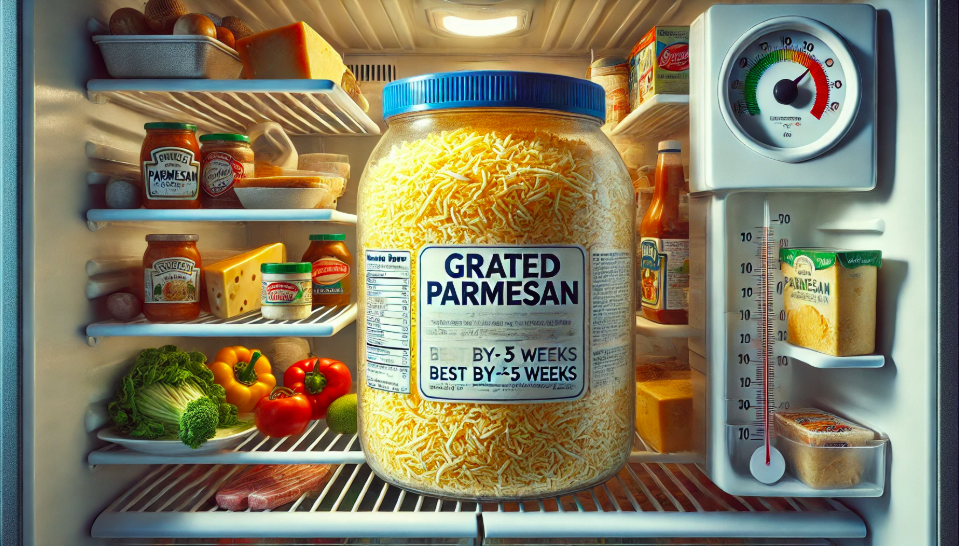
Grated Parmesan cheese lasts for different periods depending on its type and storage. Store-bought grated Parmesan, when unopened, can last up to 7 to 10 days past its expiration date in the fridge. Once opened, it is best consumed within 5 to 7 days for optimal flavor and quality.
Homemade grated Parmesan has a shorter shelf life and should be used within 3 to 4 days when stored in an airtight container in the refrigerator. Proper storage in an airtight container is essential to keep it fresh and prevent spoilage.
Signs That Grated Parmesan Has Gone Bad
Grated Parmesan cheese can spoil over time. Here are signs that it has gone bad:
- Mold Growth:Visible mold, regardless of color, indicates spoilage. Discard the cheese immediately.
- Off Odor:A strong, sour, or rancid smell suggests the cheese is no longer good. citeturn0search0
- Discoloration:Changes from the typical golden hue to a darker or paler shade can signal spoilage.
- Texture Changes:If the cheese becomes caked, clumped, or develops a slimy texture, it's best to discard it.
Regularly checking for these signs can help ensure your grated Parmesan remains fresh and safe to eat.
Storage Tips For Keeping Grated Parmesan Fresh
To keep grated Parmesan cheese fresh and flavorful, follow these storage tips:
1. Refrigerate Promptly:After opening, store grated Parmesan in the refrigerator at 40°F (4°C) to maintain its quality.
2. Limit Room Temperature Exposure:Avoid leaving the cheese at room temperature for more than one hour to prevent spoilage.
3. Use Airtight Containers:Transfer the cheese to an airtight container to protect it from moisture and odors, preserving its taste and texture.
4. Monitor for Spoilage:Regularly check for signs of spoilage, such as discoloration, off smells, or moisture. If any of these are present, discard the cheese.
By following these steps, you can extend the freshness and enjoyment of your grated Parmesan cheese.
Difference Between Freshly Grated And Pre-Packaged Parmesan Shelf Life
Freshly grated Parmesan cheese and pre-packaged grated Parmesan differ in shelf life due to their processing and storage methods.
Freshly Grated Parmesan:
- Shelf Life:When stored in the refrigerator, freshly grated Parmesan cheese is best used within 3 to 4 days. citeturn0search5
- Storage:Keep it in an airtight container to maintain freshness.
Pre-Packaged Grated Parmesan:
- Shelf Life:Unopened, it can last 7 to 10 days past the expiration date in the fridge. Once opened, it's best to use within 5 to 7 days.
- Storage:Store in the refrigerator in its original packaging or transfer to an airtight container after opening.
In summary, pre-packaged grated Parmesan generally has a longer shelf life compared to freshly grated Parmesan. Proper storage in airtight containers and refrigeration are essential for both types to maintain quality and safety.
Can You Freeze Grated Parmesan For Longer Storage?
Yes, you can freeze grated Parmesan cheese to extend its shelf life. Parmesan is a hard cheese with low moisture content, making it suitable for freezing. To freeze grated Parmesan, place it in an airtight container or a freezer-safe ziplock bag, ensuring as much air as possible is removed before sealing. Label the container with the date and store it in the freezer.
Frozen grated Parmesan can maintain its best quality for up to 18 months. citeturn0search0 When ready to use, you can add the frozen cheese directly to hot dishes like pasta, soups, or stews without thawing, as it will melt quickly. However, freezing may cause slight changes in texture, making the cheese more crumbly, so it's best used in cooked dishes rather than as a topping for salads or similar cold dishes.
What Happens If You Consume Spoiled Grated Parmesan?
Consuming spoiled grated Parmesan cheese can lead to foodborne illnesses due to the presence of harmful bacteria such as Staphylococcus aureus, Salmonella, and Escherichia coli (E. coli). These bacteria can produce toxins that cause symptoms like stomach cramps, diarrhea, vomiting, and, in severe cases, more serious health conditions.
Additionally, spoiled cheese may develop mold, which can produce mycotoxins. These toxins can lead to allergic reactions or other negative health effects. Therefore, it's best to discard moldy cheese to avoid potential health risks.
To minimize the risk of consuming spoiled cheese, it's crucial to check the expiration date and appearance of the cheese. Signs of spoilage include changes in texture, color, and odor. If the cheese exhibits any of these characteristics, it is best to discard it.
Common Mistakes To Avoid When Storing Grated Parmesan
Proper storage of grated Parmesan cheese is essential to maintain its freshness and flavor. Here are common mistakes to avoid:
- Using Plastic Wrap:Wrapping Parmesan in plastic can trap moisture, leading to mold growth. Instead, use parchment or wax paper to allow the cheese to breathe.
- Storing at Room Temperature:Leaving grated Parmesan out can cause spoilage. Always refrigerate it to preserve its quality.
- Improper Container Use:Using non-airtight containers can expose the cheese to air and moisture, causing it to dry out or mold. Store it in airtight containers to maintain freshness.
- Neglecting to Check for Spoilage:Failing to inspect the cheese regularly can result in consuming spoiled product. Look for signs like discoloration, foul odors, or moisture, and discard if any are present.
By avoiding these mistakes, you can ensure your grated Parmesan remains fresh and flavorful for longer.
How To Properly Seal And Store Grated Parmesan In The Fridge
Proper storage of grated Parmesan cheese is essential to maintain its freshness and flavor. Here are common mistakes to avoid:
- Using Plastic Wrap: Wrapping Parmesan in plastic can trap moisture, leading to mold growth. Instead, use parchment or wax paper to allow the cheese to breathe.
- Storing at Room Temperature: Leaving grated Parmesan out can cause spoilage. Always refrigerate it to preserve its quality.
- Improper Container Use:Using non-airtight containers can expose the cheese to air and moisture, causing it to dry out or mold. Store it in airtight containers to maintain freshness.
- Neglecting to Check for Spoilage:Failing to inspect the cheese regularly can result in consuming spoiled product. Look for signs like discoloration, foul odors, or moisture, and discard if any are present.
By avoiding these mistakes, you can ensure your grated Parmesan remains fresh and flavorful for longer.
Factors That Affect Grated Parmesan's Shelf Life
The shelf life of grated Parmesan cheese is influenced by several key factors:
- Storage Conditions: Proper storage is crucial. Grated Parmesan should be kept in an airtight container to prevent exposure to air and moisture, which can lead to spoilage. Refrigeration is recommended to maintain freshness.
- Moisture Exposure: Excess moisture can cause grated Parmesan to clump and promote mold growth. Keeping the cheese dry helps extend its shelf life.
- Air Exposure:Exposure to air can lead to oxidation, affecting flavor and quality. Using airtight containers minimizes this risk.
- Temperature:Storing grated Parmesan at consistent, cool temperatures slows down spoilage. Refrigeration is ideal, as room temperature can accelerate deterioration.
- Packaging:The type of packaging affects shelf life. Airtight packaging prevents contamination and moisture ingress, preserving the cheese's quality.
- Type of Cheese:Authentic, aged Parmesan generally has a longer shelf life compared to imitation versions, due to its lower moisture content and traditional production methods.
By managing these factors, you can help ensure that grated Parmesan cheese remains fresh and safe for consumption over a longer period.