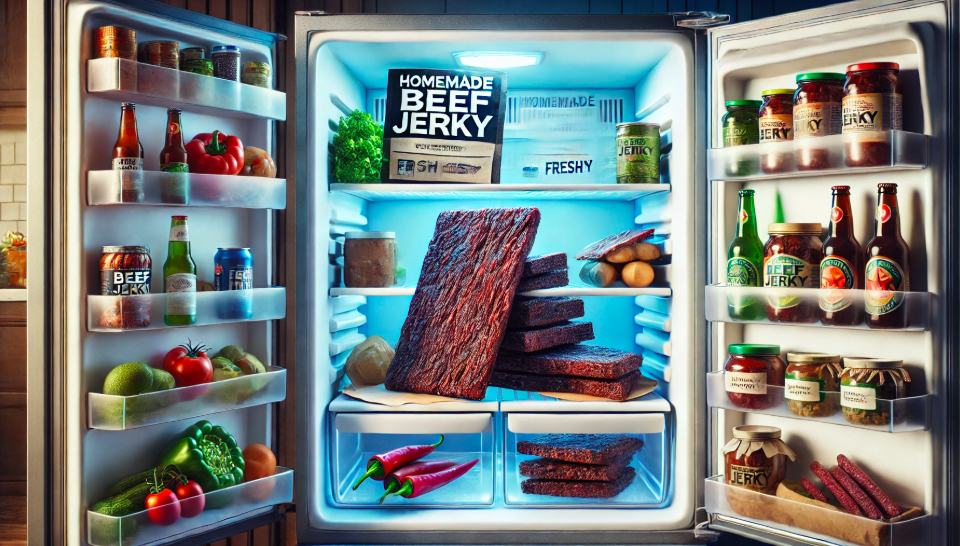
Homemade beef jerky typically lasts 1 to 2 weeks in the fridge if stored properly. To ensure it stays safe to eat, the jerky should be placed in an airtight container or resealable plastic bag. For longer storage, it can be frozen, which can extend its shelf life for up to 6 months.
The key to extending the freshness of homemade beef jerky is ensuring it has been dehydrated properly. If it is still moist or has not dried enough, it will spoil faster, even in the fridge. It’s also important to keep the jerky in a cool, dry spot to avoid any bacterial growth.
Factors Affecting The Longevity Of Beef Jerky In The Fridge
Here are the key factors that affect how long beef jerky will last in the fridge:
1. Moisture Content
Beef jerky with higher moisture content will spoil faster. The more water in the jerky, the more it needs to be refrigerated to stay fresh. Jerky that is dried well lasts longer because moisture is one of the main causes of bacteria growth and spoilage.
2. Packaging
Proper packaging is crucial. If beef jerky is stored in an airtight container or vacuum-sealed bag, it will stay fresher longer. Exposure to air can cause it to dry out and become stale, or worse, lead to mold growth.
3. Temperature Of The Fridge
A fridge should be kept at a consistent temperature of around 40°F (4°C). A fridge that's too warm may not slow down the growth of bacteria and mold. If the fridge is too cold, it might cause jerky to dry out and lose flavor.
4. Quality Of The Meat
The quality of the meat used for jerky can affect its shelf life. Fresh, high-quality meat that’s properly prepared and dried will have a longer shelf life than jerky made from lower-quality cuts.
5. Salt And Preservatives
Salt is a natural preservative in jerky, and the higher the salt content, the longer it can last. Some jerky might also contain other preservatives like nitrates, which help extend its shelf life by preventing bacterial growth.
6. Storage Conditions
In addition to proper packaging and fridge temperature, jerky should be kept away from light and heat, as these factors can lead to quicker spoilage. It’s best to store beef jerky in a dark, cool place inside the fridge.
7. Exposure To Air
Air exposure can make jerky dry out and lose its flavor. If beef jerky isn’t sealed tightly or if it’s left in the open, it can become hard and stale faster. Vacuum sealing or using zippered bags helps to keep air away.
8. Expiration Date
Always check the expiration date on store-bought jerky. Even though beef jerky can last for a long time, it's best to follow the manufacturer’s guidelines for optimal freshness.
Signs That Homemade Beef Jerky Has Gone Bad
Signs that homemade beef jerky has gone bad include:
- Unpleasant Odor Beef jerky that has gone bad will often have a sour or rancid smell. Fresh jerky has a smoky, savory scent, but if the smell turns foul, it’s a clear sign that it’s spoiled.
- Off Color or Appearance Fresh jerky is typically a deep red or brown color. If it looks unusually dark or has a greenish tint, it could be mold or bacteria, indicating it’s no longer safe to eat.
- Mold Growth If you see any fuzzy, green, white, or black patches on the jerky, it is mold, and the jerky should be discarded immediately.
- Slimy Texture Jerky should be dry and firm to the touch. If it feels sticky or slimy, it has likely developed bacteria or gone bad.
- Dry or Crumbly Texture Jerky can become too dry or overly crumbly if it has been stored improperly or for too long. While jerky is supposed to be somewhat tough, if it falls apart easily or feels overly brittle, it may have spoiled.
- Taste Changes If the jerky tastes off or has a sour or rancid flavor, it’s no longer safe to eat. Fresh jerky has a savory, seasoned taste that should not be unpleasant.
- Softness or Wetness Beef jerky is meant to be dried, and if it’s soft or has moisture, it’s a sign that bacteria may be growing, especially if the jerky is stored improperly.
How To Properly Store Homemade Beef Jerky In The Fridge
To properly store homemade beef jerky in the fridge, follow these simple steps:
1. Cool The Jerky First
Before placing homemade beef jerky in the fridge, let it cool to room temperature. This prevents condensation, which could lead to mold growth.
2. Use An Airtight Container Or Zip-Top Bag
Once cooled, store the jerky in an airtight container or a resealable zip-top plastic bag. This helps to maintain the jerky's flavor and texture by keeping air and moisture out.
3. Add Silica Gel Packets (Optional)
For extra protection against moisture, you can add silica gel packets into the container or bag. These packets help absorb any remaining moisture and keep the jerky dry.
4. Store In The Coldest Part Of The Fridge
Place the container or bag in the coldest part of the fridge, usually near the back or bottom. Keeping it cold slows down the growth of bacteria and helps the jerky last longer.
5. Check For Quality Regularly
Even when stored properly, homemade jerky will still degrade over time. Check the jerky every few days for any signs of spoilage like unusual smells, changes in texture, or mold. If you notice anything off, discard the jerky.
6. Consume Within 1-2 Weeks
While refrigeration can extend the shelf life of homemade jerky, it is still best to consume it within 1-2 weeks for optimal taste and freshness.
Can You Freeze Homemade Beef Jerky For Longer Shelf Life?
Yes, you can freeze homemade beef jerky to extend its shelf life. Freezing helps preserve the jerky by slowing down the growth of bacteria and mold. To do this properly, store the jerky in an airtight container or a vacuum-sealed bag before placing it in the freezer. Make sure to remove as much air as possible to prevent freezer burn.
While freezing jerky can help it last for up to 6 months or more, the texture might change slightly when thawed. For the best results, consume it within a few months for optimal taste and quality.
The Best Practices For Extending The Freshness Of Homemade Jerky
Best Practices for Extending the Freshness of Homemade Jerky
Homemade jerky is delicious, but it can spoil quickly if not stored properly. Here are some simple practices to keep your jerky fresh for longer:
1. Cool It Quickly After Drying
Once your jerky is done drying, it’s important to let it cool at room temperature for no more than two hours. Cooling it quickly helps avoid the growth of bacteria that could cause spoilage.
2. Store Jerky In An Airtight Container
To keep jerky fresh, always store it in an airtight container. This helps to prevent air from reaching the jerky, which can cause it to dry out and lose flavor. You can use resealable plastic bags, vacuum-sealed bags, or glass jars with tight-fitting lids.
3. Use Proper Storage Locations
Keep your jerky in a cool, dry place. A pantry, cupboard, or any dark spot away from heat sources works best. Avoid storing jerky in places that experience high humidity, as this can lead to mold growth.
4. Freeze Jerky For Long-Term Storage
If you don’t plan to eat your jerky within a few weeks, freezing it is an excellent option. Wrap your jerky tightly in plastic wrap or vacuum-seal it before placing it in the freezer. This method can extend its shelf life for up to 6 months or even longer.
5. Consider Using Oxygen Absorbers
Oxygen absorbers help keep jerky fresh by reducing the amount of oxygen in the packaging. This slows down the process of spoilage and keeps your jerky tasting fresh for longer. You can buy oxygen absorbers online or at stores that sell food storage supplies.
6. Check For Moisture
Before storing, check your jerky to ensure there’s no excess moisture. Any remaining moisture can lead to mold growth and spoilage. If you see any moisture, it’s best to dry the jerky further before storing.
7. Avoid Direct Sunlight
Never store jerky in direct sunlight, as the heat and light can break down the proteins and fats in the meat, leading to a decrease in quality and freshness. Keep jerky in a shaded, cool area to preserve its flavor and texture.