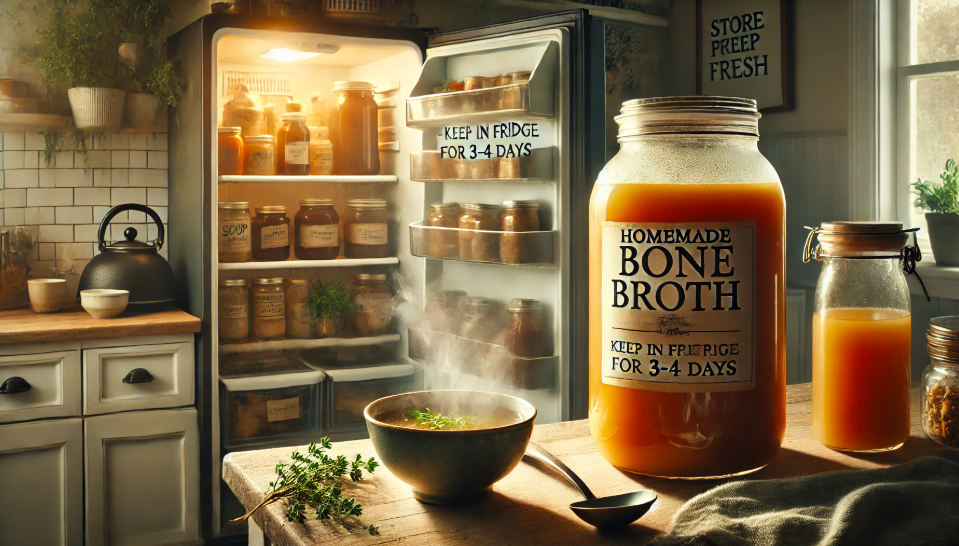
Homemade bone broth typically lasts about 4 to 5 days in the fridge. To store it properly, make sure it's in an airtight container and cooled down to room temperature before placing it in the fridge.
If you want it to last longer, you can freeze bone broth. In the freezer, it can stay good for 2 to 3 months. For the best quality, always check for signs of spoilage like an off smell, mold, or unusual texture before using it.
Factors That Affect Bone Broth's Shelf Life
Bone broth is a nutritious, flavorful liquid made by simmering animal bones with water, vegetables, and seasonings for an extended period. The shelf life of bone broth depends on several factors, which can affect its safety and quality over time. Below are the key factors that influence how long bone broth can last:
1. Storage Temperature
- Refrigeration: When bone broth is stored in the refrigerator, it typically lasts 3-4 days. Keeping it at a constant, cold temperature slows the growth of bacteria and other microorganisms.
- Freezing: Freezing bone broth extends its shelf life significantly. It can last up to 6 months or longer in the freezer. Make sure to store it in airtight containers to prevent freezer burn.
- Room Temperature: Bone broth should not be kept at room temperature for more than 2 hours. Bacteria can grow rapidly at warmer temperatures, leading to spoilage.
2. Storage Containers
- Airtight Containers: Using containers that are airtight (such as glass jars with tight-fitting lids or freezer-safe bags) helps prevent air from reaching the broth. Exposure to air can lead to oxidation, which can cause the broth to spoil more quickly.
- Plastic vs. Glass: While both plastic and glass containers can work for storage, glass containers are often preferred because they don’t react with the broth and provide a better seal.
3. Heating And Cooling
- Cooling: After cooking bone broth, it should be cooled down as quickly as possible before storing it. Leaving it out to cool for too long at room temperature increases the chance of bacterial growth.
- Reheating: Reheating the broth should be done properly. If you reheat it multiple times or to a temperature that isn’t hot enough (above 165°F or 74°C), this can allow bacteria to grow, reducing its shelf life.
4. Ingredients And Additives
- Additives: Certain ingredients, such as salt, sugar, or preservatives, can impact the shelf life of bone broth. While salt acts as a preservative, too much sugar or other additives can speed up spoilage. The more natural the broth, the shorter its shelf life.
- Type of Bones and Meat: The type of animal bones and meat used in making the broth can also affect its longevity. Broths made with fatty cuts may spoil faster due to the fats going rancid. Leaner broths tend to last a bit longer.
5. Sanitation During Preparation
Cleanliness: If the broth is prepared in an environment with poor hygiene, there’s a higher chance that bacteria or pathogens could be introduced. This can shorten its shelf life, making it more prone to spoilage. Ensure that all cooking utensils and containers are sanitized before use.
6. Exposure To Light
Light: Storing bone broth in a location where it is exposed to light for long periods can decrease its quality. Ultraviolet light can degrade nutrients and affect the taste, leading to a shorter shelf life. It’s best to store broth in opaque containers or in a dark, cool place.
7. PH Level
Acidity: The acidity of the bone broth can also influence how long it lasts. Broths that are more acidic, often made with added vinegar or lemon, may have a slightly longer shelf life, as the acidity can help slow down bacterial growth.
Signs Your Bone Broth Has Gone Bad
Bone broth, like any perishable food, can go bad over time. It's important to be able to recognize the signs that indicate your broth is no longer safe to eat. Here are the main signs that your bone broth has gone bad:
1. Smell
Sour or Unpleasant Odor: Fresh bone broth should have a savory, rich smell. If it smells sour, rancid, or like spoiled food, this is a clear sign that the broth has gone bad. A bad odor indicates that harmful bacteria or mold may have started to grow.
2. Change In Color
Discoloration: Bone broth can change color as it ages. If it turns a strange, off color (such as green, yellow, or dark brown), it’s a sign that it has spoiled. Fresh broth usually has a rich, golden or brown color. Darkening may indicate that the broth has been exposed to air or stored for too long.
3. Mold Growth
Mold: If you notice any fuzzy or slimy patches on the surface of the broth, especially after it has been stored in the fridge for a few days, this is mold. Mold is a clear sign that the broth is no longer safe to consume and should be discarded immediately.
4. Strange Taste
Off Taste: Taste is one of the best indicators of whether your bone broth is still good. If the broth tastes sour, bitter, or "off," it has likely spoiled. The rich, savory flavor of fresh bone broth will turn unpleasant and unpleasantly sour when it’s gone bad.
5. Change In Texture
Separation or Sliminess: While bone broth naturally thickens as it cools (due to the gelatin released from the bones), if the broth becomes overly slimy, sticky, or has an unusual texture when reheated, this may be a sign that it’s spoiling.
6. Fizzy Or Bubbling
Fizzy or Bubbling: Bone broth should not bubble or fizz unless it is freshly cooked. If you see bubbles or hear popping sounds after the broth has been stored, this could be a sign of fermentation or bacterial growth, indicating that it has spoiled.
7. Expiration Date (If Store-Bought)
Past Expiry: If you have store-bought bone broth, always check the expiration date. If the broth is past its "use by" date, it’s best to discard it, especially if it has been stored improperly.
8. Storage Issues
Improper Storage: If bone broth has been left out at room temperature for too long (more than 2 hours), it’s at high risk of spoiling. If you find your broth has been stored improperly or exposed to heat for too long, it’s safer to discard it, even if there are no obvious signs of spoilage.
How To Store Homemade Bone Broth Properly
To store homemade bone broth properly and ensure it stays fresh and safe to consume, follow these steps:
1. Cool The Broth Quickly
After making the bone broth, it’s important to cool it down quickly before storing it. This helps prevent bacterial growth. Let the broth cool on the counter for about 30 minutes. To speed up cooling, you can place the pot in an ice bath (a larger container filled with ice and water) or pour the broth into smaller containers to let it cool faster.
2. Use Proper Containers
Store the broth in airtight containers. Glass jars, plastic containers, or silicone bags work well. Make sure the containers are clean and dry before using them. If you plan to store a large amount, divide the broth into smaller portions to make it easier to use later.
3. Refrigeration For Short-Term Storage
If you plan to use the broth within a few days, store it in the refrigerator. It can stay fresh for up to 3-4 days when kept in an airtight container. Ensure the temperature of the fridge is below 40°F (4°C).
4. Freezing For Long-Term Storage
For longer storage, freezing is the best option. Bone broth can be frozen for up to 6 months. Pour the cooled broth into freezer-safe containers, leaving about an inch of space at the top for expansion as the broth freezes. You can also use freezer bags or ice cube trays for smaller portions. Once frozen, the broth can be easily defrosted and used as needed.
5. Label The Containers
It’s helpful to label the containers with the date the broth was made. This ensures you use it within the recommended time frame and avoid keeping it for too long.
6. Thawing And Reheating
When you’re ready to use frozen bone broth, thaw it in the refrigerator overnight or reheat it directly from frozen on the stove over low heat. Do not thaw broth at room temperature as it can lead to bacterial growth.
Can You Freeze Homemade Bone Broth For Longer Storage?
Yes, you can freeze homemade bone broth for longer storage. Freezing bone broth is an excellent way to keep it fresh for a longer period of time, allowing you to use it when needed.
Here’s how you can do it:
- Cool the Bone Broth: After making the broth, let it cool completely before freezing. This helps prevent ice crystals from forming, which can change the texture and taste of the broth.
- Use Airtight Containers: Pour the cooled bone broth into airtight containers, freezer-safe bags, or ice cube trays. Make sure there is some space at the top of the container to allow for expansion as the broth freezes.
- Freeze in Portions: It’s best to freeze bone broth in smaller portions so you can thaw only what you need. Ice cube trays are great for this, as they allow you to freeze small, single-serving amounts.
- Label and Date: Label the containers with the date so you can keep track of how long it has been in the freezer. Bone broth can last up to 6 months in the freezer for best quality.
- Thawing: To thaw the bone broth, you can leave it in the refrigerator overnight or heat it on the stove. If you’re using ice cube trays, you can just take out the number of cubes you need and heat them directly.
By freezing bone broth, you can preserve its flavor and nutrients, making it convenient for future use.
How To Extend The Freshness Of Bone Broth
To extend the freshness of bone broth, follow these practical tips:
1. Cool Bone Broth Quickly
After cooking your bone broth, it’s important to cool it down quickly to prevent bacteria from growing. You can do this by placing the pot in an ice bath (a larger container filled with ice and water) or by transferring the broth into smaller containers to speed up the cooling process.
2. Store In Proper Containers
Store bone broth in airtight containers to keep it fresh. Glass jars with tight-fitting lids or BPA-free plastic containers work well. If you're freezing it, make sure to leave a bit of space at the top of the container to allow for expansion as the broth freezes.
3. Freeze For Long-Term Storage
Bone broth can be stored in the freezer for several months. For easy use, consider freezing it in ice cube trays. Once frozen, you can transfer the cubes to a resealable bag or container. This way, you can thaw only the amount you need without having to thaw the entire batch.
4. Refrigerate For Short-Term Storage
If you plan to use the broth within a few days, store it in the refrigerator. Bone broth typically lasts about 3 to 5 days in the fridge. Make sure your refrigerator is set to the proper temperature (around 37°F or 3°C) to keep the broth fresh.
5. Label And Date
When freezing or refrigerating bone broth, label your containers with the date it was made. This will help you track how long it’s been stored and ensure you use it while it’s still fresh.
6. Keep The Lid On
Always keep the lid on the container tightly closed to prevent contamination. Air can spoil the broth faster by introducing bacteria, so the tighter the seal, the better.
7. Reheat Safely
When reheating, always bring the broth to a boil to kill any bacteria that may have developed during storage. Avoid reheating multiple times, as this can reduce the quality and safety of the broth.
These tips help keep your bone broth fresh and safe for longer, so you can enjoy it without worry.
Best Containers For Storing Bone Broth In The Fridge
When it comes to storing bone broth in the fridge, it's important to use containers that keep it fresh, safe, and easy to use later. The best containers for this purpose should be airtight, durable, and non-toxic. Here are some top recommendations based on expert advice and common practices:
1. Glass Containers With Tight-Fitting Lids
Glass containers are great for storing bone broth because they don’t absorb odors or stain over time. They also help maintain the flavor and quality of the broth. Glass is non-reactive, which means it won’t interact with the broth and affect its taste or safety.
Best Features:
- Airtight lids to prevent air exposure and spoilage.
- Easy to clean and reuse.
- Dishwasher-safe options available.
Top Choices:
- Pyrex Glass Storage Containers: Known for durability and versatility.
- Weck Glass Jars: Classic design with rubber seals and clips for secure closure.
2. Stainless Steel Containers
Stainless steel containers are sturdy and provide excellent protection from light and air, both of which can degrade the quality of bone broth over time. These containers are also lightweight, easy to store, and resistant to staining or odors.
Best Features:
- Leak-proof and airtight when sealed properly.
- Long-lasting and easy to clean.
- Non-toxic and BPA-free.
Top Choices:
- U-Konserve Stainless Steel Containers: Known for their eco-friendly design and tight seals.
- LunchBots Stainless Steel Containers: Simple and effective for storing liquids like bone broth.
3. BPA-Free Plastic Containers
While glass and stainless steel are often preferred, BPA-free plastic containers are a more affordable option and can still provide good storage for bone broth. They are lightweight and can come in large sizes, making them ideal for storing larger quantities of broth.
Best Features:
- Lighter than glass and stainless steel.
- Usually come with locking lids to maintain airtight seals.
- Available in a variety of sizes, making them great for portioning.
Top Choices:
- Rubbermaid Brilliance Storage Containers: These have leak-proof lids and are stain-resistant.
- Snapware Total Solution Containers: Known for secure lids and stackable design.
4. Freezer-Safe Containers (For Long-Term Storage)
If you plan to store your bone broth for a long time, consider using freezer-safe containers. These containers can help you store broth in the fridge initially and then move it to the freezer for later use.
Best Features:
- Built to handle both cold and warm temperatures.
- Keeps bone broth fresh for longer periods.
- Can be used in the microwave for reheating.
Top Choices:
- Oxo Good Grips Freezer Containers: Durable, leak-proof, and freezer-safe.
- Glasslock Containers: Offers airtight seals and works well in both the fridge and freezer.
5. Silicone Storage Bags
If you're looking for a more flexible and space-saving option, silicone storage bags are a great choice. These bags can be filled with bone broth, sealed tightly, and stored in the fridge. They're also easy to clean and store in smaller spaces.
Best Features:
- Flexible and space-saving.
- Can be used for both fridge and freezer storage.
- Made from food-grade, non-toxic silicone.
Top Choices:
- Stasher Silicone Storage Bags: Reusable, airtight, and microwave-safe.
- Full Circle Reusable Silicone Bags: Eco-friendly and leak-proof.
Key Considerations For Storing Bone Broth:
- Airtight Seals: To keep the bone broth fresh and prevent it from absorbing odors from other foods in the fridge.
- Size: Consider how much broth you have and choose containers that suit your portioning needs. If you store large batches, look for bigger containers; smaller portions might need smaller ones.
- Ease of Use: Look for containers that are easy to open and close, and that don’t leak.
- Durability: Choose materials that won't crack, stain, or degrade over time.
By selecting the right container for your bone broth, you can ensure it stays fresh, tasty, and safe to consume whenever you’re ready to enjoy it.
The Ultimate Guide To Reheating Bone Broth
Bone broth is a flavorful, nutritious liquid made by simmering bones and connective tissues from animals like chicken, beef, or pork for several hours. When properly made, bone broth is full of collagen, amino acids, and minerals that support joint, skin, and gut health. Reheating bone broth the right way is essential to preserve its taste, nutrients, and texture. Here’s a simple guide to help you reheat your bone broth without losing its goodness.
Stovetop
- Step 1: Pour your bone broth into a saucepan or pot.
- Step 2: Place the pot over medium heat.
- Step 3: Stir occasionally to make sure it heats evenly.
- Step 4: Once the broth is hot, remove from the heat. It should reach a gentle simmer but not a full boil to avoid overcooking it.
- Pro Tip: If your bone broth has separated or hardened in the fridge, simply add a little water to help it loosen up as it heats.
Microwave (Quick Option For Small Portions)
- Step 1: Pour the bone broth into a microwave-safe container.
- Step 2: Cover the container with a microwave-safe lid or a paper towel to prevent splattering.
- Step 3: Heat on medium heat in 30-second intervals, stirring after each interval to prevent overheating.
- Step 4: Once hot, remove the container and stir again to check the temperature.
- Pro Tip: Microwave heating can cause uneven heating, so make sure to stir well to distribute the heat.
Slow Cooker (For Large Batches)
- Step 1: Pour your bone broth into the slow cooker.
- Step 2: Set the slow cooker to low heat.
- Step 3: Let it warm up for 2 to 3 hours, stirring occasionally.
- Pro Tip: The slow cooker is great for reheating large amounts, but it may take longer than other methods.
Double Boiler Method
- Step 1: Fill a small pot with water and place it on the stove on medium heat.
- Step 2: Put a heatproof bowl with the bone broth into the pot (it should not touch the water).
- Step 3: Stir the broth occasionally as it warms up in the steam from the water.
- Pro Tip: This method is the gentlest and can help preserve both the flavor and nutrients of the broth.
3. Tips To Keep Bone Broth Fresh When Reheating
- Don’t Overheat: Avoid letting the broth come to a full boil, as this can affect its flavor and texture. It should only simmer gently.
- Add Water if Needed: Bone broth tends to reduce or thicken over time, so you can add a little water or another broth to adjust the consistency as it reheats.
- Store Properly: If you’re not using the broth immediately, store it in an airtight container in the fridge. Bone broth can last up to 5 days in the refrigerator or 6 months in the freezer.
- Freeze in Portions: If you make a big batch, freeze it in small portions so you can heat only what you need, saving time and effort later.
4. How To Tell If Bone Broth Is Ready To Drink
The best way to check if your bone broth is ready to drink is to taste it. It should be warm but not too hot to sip. The flavors should be rich, savory, and full-bodied. If you feel that the broth has lost some of its intensity, you can add a pinch of salt or seasonings to enhance the flavor.