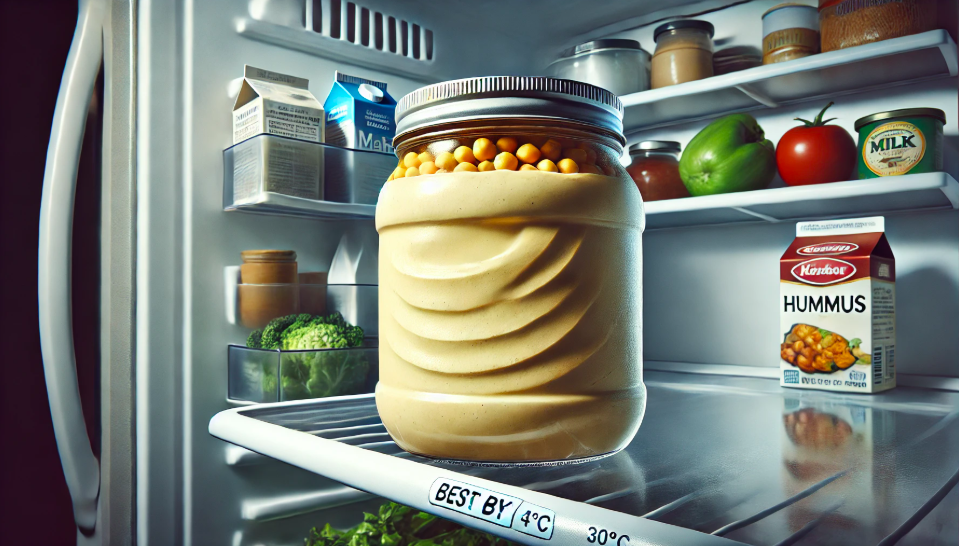
Hummus typically lasts about 4 to 7 days in the fridge after it’s been opened, assuming it has been stored properly. Homemade hummus generally stays fresh for about 3 to 5 days, while store-bought hummus may last a bit longer, typically up to 7 days, depending on preservatives and packaging. Always check the “use by” or “best before” date on store-bought hummus and refrigerate it immediately after opening.
Factors That Affect How Long Hummus Lasts In The Fridge
- Ingredient freshness: Freshly prepared hummus with ingredients like homemade chickpeas or freshly squeezed lemon juice may spoil faster than store-bought varieties.
- Cleanliness of utensils and containers: Contaminating the hummus with dirty utensils or containers can introduce bacteria that will accelerate spoilage.
- Fridge temperature: Ensure your fridge is set to 40°F (4°C) or lower to slow down bacterial growth and keep the hummus fresh for longer.
How To Store Hummus For Maximum Freshness
To keep hummus fresh as long as possible, store it in an airtight container. Ensure the container is sealed tightly to prevent exposure to air, which can cause the hummus to dry out or develop mold. You can also cover the surface of the hummus with a thin layer of olive oil before sealing it to help lock in moisture and maintain its smooth texture. Always place the container in the coldest part of the fridge and avoid leaving it out at room temperature for extended periods.
Signs Hummus Has Gone Bad
- Smell: A sour, rancid, or off odor is a strong indication that it has spoiled.
- Mold or discoloration: Mold growth or unusual color changes on the surface suggest spoilage.
- Texture: If the hummus becomes excessively watery or has a gritty consistency instead of its usual smooth texture, it's likely no longer safe to eat.
Does Store-Bought Hummus Last Longer Than Homemade?
Yes, store-bought hummus typically lasts longer than homemade hummus. This is because commercial hummus often contains preservatives like citric acid or sodium benzoate, which help extend its shelf life. The packaging also plays a role in keeping store-bought hummus fresher longer by reducing exposure to air. In contrast, homemade hummus lacks these preservatives and is more vulnerable to spoilage, especially if not stored properly.
Can You Freeze Hummus?
Yes, hummus can be frozen, though it may affect the texture. Freezing may cause hummus to become a little grainy or watery once thawed, but it is still safe to eat. To freeze hummus, transfer it into a freezer-safe, airtight container, leaving some space at the top for expansion. You can also portion it into smaller containers for convenience. When ready to use, thaw the hummus in the fridge overnight and stir it well before serving to regain some of its original smoothness.
Tips For Safely Reheating Hummus After Storing
Reheating hummus is generally unnecessary since it's typically served cold or at room temperature. However, if you prefer warm hummus, it’s important to reheat it gently to maintain its creamy texture and flavor. Here’s how you can do it:
- Microwave Method: Place the hummus in a microwave-safe bowl and heat it in short intervals (10–15 seconds). Stir it between each interval until it reaches the desired temperature.
- Stovetop Method: Heat the hummus over low heat in a saucepan, stirring constantly to avoid burning. You can add a small amount of olive oil or water to help restore its smoothness.