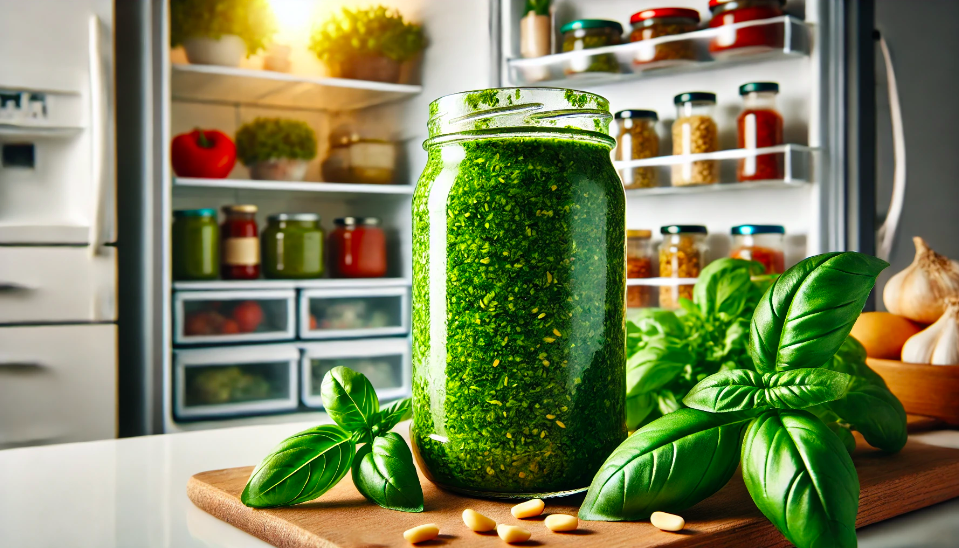
Pesto can typically last about 5 to 7 daysin the fridge when stored in an airtight container. To keep it fresh for longer, cover the surface of the pesto with a thin layer of olive oil before sealing the container. This helps prevent oxidation and keeps it from turning brown. If you want it to last even longer, you can freeze pesto, which will keep it for up to 6 months. Always check for signs of spoilage, like an off smell or mold, before using it.
Homemade Pesto:
- In the Fridge:Homemade pesto usually stays fresh for 4 to 5 days when kept in the refrigerator.
- Storage Tips:To keep it fresh longer, store it in an airtight container. Pouring a thin layer of olive oil on top can help prevent it from turning brown.
Store-Bought Pesto:
- Unopened Jar:If the jar is unopened, it can last until the expiration date printed on it. Check the label to see if it needs refrigeration.
- After Opening:Once opened, store-bought pesto lasts about 7 to 10 days in the fridge.
Extending Shelf Life:
- Freezing:You can freeze pesto to make it last up to 6 months. Use ice cube trays to freeze small portions, then transfer them to a freezer bag.
- Clean Utensils:Always use a clean spoon to scoop out pesto to avoid contamination.
- Seal Tightly:Keep the container sealed well when not in use.
Signs Pesto Has Gone Bad:
- Color Change:If the pesto turns dark or brown, it might be spoiled.
- Unpleasant Smell:A sour or off smell indicates it's no longer good.
- Mold:Any signs of mold mean it should be thrown away immediately.
Tips For Storing Pesto To Extend Freshness
To keep your pesto fresh and flavorful for as long as possible, follow these straightforward storage tips:
Refrigeration:
- Use Airtight Containers:Transfer your pesto into a clean, airtight container to prevent air exposure, which can cause spoilage.
- Add a Layer of Olive Oil:Pour a thin layer of olive oil over the top of the pesto before sealing. This acts as a barrier against air and helps maintain its vibrant color.
- Consume Promptly:Store-bought pesto should be consumed within 5 to 7 days after opening, while homemade pesto is best used within 3 to 4 days.
Freezing:
- Portioning:Divide pesto into small portions using ice cube trays. Once frozen, transfer the cubes to a freezer-safe bag or container. This allows you to thaw only what you need.
- Storage Duration:Frozen pesto can maintain its quality for up to 3 to 4 months.
Additional Tips:
- Avoid Cross-Contamination:Always use a clean spoon when scooping pesto to prevent introducing bacteria.
- Check for Spoilage:Before use, inspect the pesto for any signs of mold, off smells, or discoloration. If any are present, it's safer to discard it.
FAQs
Can You Freeze Pesto To Make It Last Longer?
Yes, you can freeze pesto to extend its shelf life. Freezing preserves its flavor and allows you to enjoy it for up to six months. To freeze pesto, place it in an airtight container, covering the surface with a thin layer of olive oil to prevent oxidation. Alternatively, you can freeze pesto in ice cube trays for convenient portioning. When ready to use, thaw the desired amount in the refrigerator or at room temperature. This method ensures you have pesto available for various dishes without compromising its taste.
Does The Type Of Pesto Affect Its Shelf Life?
The type of pesto significantly affects its shelf life. Store-bought pesto, especially if unrefrigerated, often contains preservatives that allow it to stay fresh for several months when unopened. Once opened, however, it should be refrigerated and used within 1 to 2 weeks. Refrigerated store-bought pesto has a shorter shelf life even when unopened, generally lasting until its "use by" date and about a week after that. After opening, refrigerated pesto should be used within 4 to 7 days to maintain quality.
Homemade pesto, which lacks preservatives, has the shortest shelf life and should be consumed within 3 to 4 days when stored in the refrigerator. To extend the life of any pesto, freezing is an effective option. Portioning the pesto into ice cube trays and then storing the cubes in a freezer-safe container allows it to maintain quality for 3 to 4 months. Generally, preservatives and proper storage play key roles in keeping pesto fresh and safe to use.
What Happens If You Eat Expired Pesto?
Eating expired pesto can lead to food poisoning due to bacteria like Salmonellaand Listeria, which may grow as the pesto spoils. Symptoms of food poisoning from spoiled pesto include nausea, vomiting, diarrhea, and stomach pain. In some cases, there’s a risk of botulism, a rare but serious illness caused by the toxin of Clostridium botulinum. This bacteria thrives in low-oxygen environments like improperly stored pesto. Botulism can cause muscle paralysis and breathing difficulties, which can be life-threatening if untreated.
To reduce risks, proper storage of pesto is essential. Unopened, store-bought pesto can sometimes be safe past its expiration date if stored in a cool, dry place, but opened pesto should be refrigerated and used within a week. Homemade pesto, which has no preservatives, should ideally be consumed within a few days and always kept refrigerated. Before eating pesto, check for signs of spoilage, such as color changes, mold, bad smell, or a sour taste, as these indicate it is no longer safe to eat.
How To Properly Reheat Or Use Leftover Pesto
Reheating or reusing leftover pesto requires careful handling to maintain its fresh flavor and texture. Here are some straightforward methods:
Reheating Pesto Pasta:
1. Stovetop Method:
- Place a non-stick pan over low heat.
- Add a small amount of olive oil or butter.
- Add the leftover pesto pasta.
- Stir gently for 5-7 minutes until warmed through.
2. Microwave Method:
- Place the pasta in a microwave-safe dish.
- Sprinkle a little water over the pasta to retain moisture.
- Cover the dish loosely with microwave-safe plastic wrap or a lid.
- Heat on medium power for 1-2 minutes, stirring halfway through.
3. Oven Method:
- Preheat the oven to 350°F (175°C).
- Place the pasta in an oven-safe dish.
- Cover with aluminum foil to retain moisture.
- Bake for about 15-20 minutes, stirring once halfway through.
Using Leftover Pesto in New Dishes:
- Spread:Use pesto as a flavorful spread on sandwiches or toast.
- Dip:Serve as a dip for vegetables or breadsticks.
- Marinade:Mix with olive oil to create a marinade for chicken or fish.
- Salad Dressing:Combine with vinegar or lemon juice for a zesty salad dressing.
Storage Tips:
- Refrigeration:Store leftover pesto in an airtight container in the refrigerator for up to a week.
- Freezing:For longer storage, freeze pesto in ice cube trays, then transfer the cubes to a freezer bag. This allows you to thaw small portions as needed.