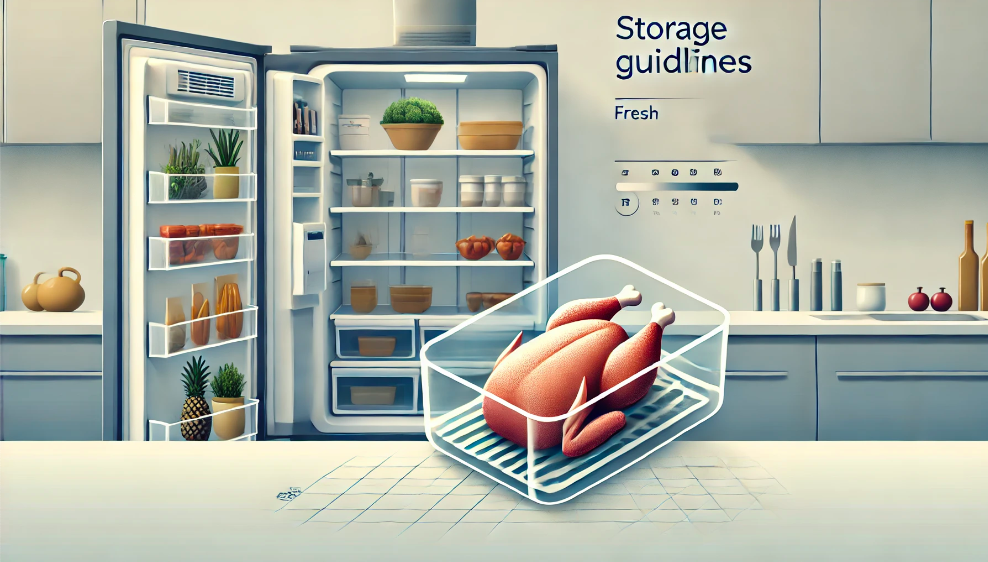
When storing raw chicken in your refrigerator, it's important to use it within a short time frame to ensure it remains safe to eat. Generally, you should aim to cook or freeze raw chicken within 1 to 2 days after placing it in the fridge. This timeframe applies to all forms of raw chicken, whether it's whole, in parts, or ground.
To keep your chicken fresh, store it at or below 40°F, ideally on the bottom shelf of your refrigerator to prevent any juices from contaminating other foods. This placement also takes advantage of the coldest part of your fridge, which helps inhibit bacterial growth
Factors Affecting Raw Chicken Shelf Life
To keep raw chicken fresh in the refrigerator, several factors need to be considered:
- Temperature: The refrigerator should be set at or below 40°F (4°C) to slow bacterial growth and preserve the chicken's freshness.
- Packaging: Raw chicken should be stored in its original packaging or in airtight containers or wraps. This helps prevent air exposure and contamination.
- Placement: Store raw chicken on the bottom shelf of the fridge to prevent juices from contaminating other foods.
- Handling: Raw chicken should be placed in the fridge immediately after purchase. If marinating, keep it in the fridge during the process.
Proper Ways to Store Raw Chicken
To store raw chicken properly and safely, it's important to follow these guidelines:
- Refrigeration: Keep raw chicken in the coldest part of your refrigerator, typically at the back. Use it within 1-2 days to ensure freshness
- Thawing: Always thaw chicken in the refrigerator, under cold water, or in the microwave using the defrost setting. Avoid thawing chicken at room temperature as it can promote bacterial growth
Signs Your Raw Chicken Has Gone Bad
Here are some clear signs that your raw chicken has gone bad, using straightforward vocabulary:
- Color Changes: Fresh raw chicken is usually a pale pink. If it starts turning gray or greenish, it's likely spoiled.
- Bad Smell: One of the quickest ways to tell if chicken is no longer safe to eat is by smelling it. Fresh chicken should have a mild smell, if any. If it smells sour or unpleasant (like ammonia), it's best to throw it away.
- Texture: Fresh chicken should feel moist but not slimy. If the chicken feels tacky or sticky, it has likely gone bad.
- Expiration Date: Always check the “sell by” or “use by” date on the package. If the date has passed, it's safer not to use the chicken.
- Mold: Any signs of mold or growths on the chicken mean that it has spoiled and should not be consumed.
Safety Guidelines for Handling Raw Chicken
Handling raw chicken safely is crucial to prevent foodborne illnesses like salmonella and campylobacter. Here are some simple guidelines to ensure you're managing raw chicken properly:
- Shopping and Storing:
- Preparation:
Difference Between Refrigerating and Freezing Raw Chicken
The main difference between refrigerating and freezing raw chicken lies in their impact on the chicken's shelf life and quality. Refrigerating raw chicken is a short-term storage solution. It can be safely stored in the refrigerator for one to two days at temperatures of 40°F (4°C) or below. This short storage period is due to the rapid growth of bacteria at refrigerator temperatures, which can quickly lead to spoilage.Freezing raw chicken, on the other hand, significantly extends its shelf life. Chicken can be safely stored in the freezer for up to nine months if kept at 0°F (-18°C) or lower. This method stops bacterial growth by putting the bacteria into a dormant state, preserving the chicken's safety and quality for longer periods. When ready to use, chicken should be thawed safely in the refrigerator or using the microwave's defrost setting to prevent the growth of harmful bacteria