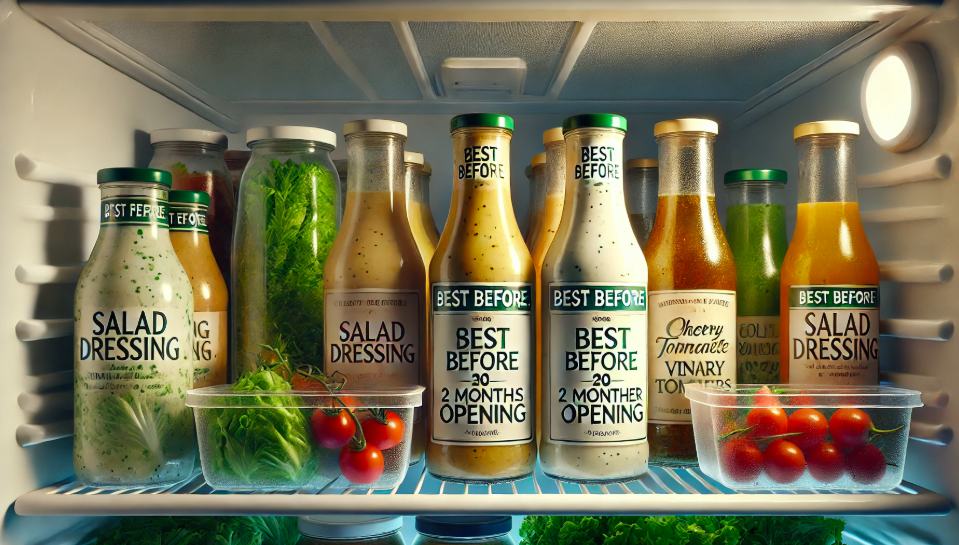
The shelf life of salad dressing in the fridge depends on whether it is store-bought or homemade, as well as its ingredients. Store-bought dressings that are shelf-stable before opening can last 6-12 months unopened when stored properly. Once opened, vinaigrettes typically remain fresh for about 3-4 months in the fridge, while creamy dressings like Ranch or Caesar last around 1-2 months.
Refrigerated dressings, often found in the fresh produce section, usually need to be refrigerated at all times and last about 1-2 weeks after opening. On the other hand, homemade salad dressings, which lack preservatives, have a much shorter shelf life. Oil and vinegar-based vinaigrettes can last 1-2 weeks, whereas creamy, dairy-based dressings typically need to be consumed within 3-7 days.
Tips for Proper Storage of Salad Dressings
Proper storage of salad dressings is essential to maintain their freshness and prevent spoilage. Here are some straightforward tips:
1. Use Appropriate Containers:
Store dressings in airtight, non-reactive containers, such as glass jars or bottles with tight-fitting lids. Glass is preferred as it doesn't react with acidic ingredients like vinegar.
2. Refrigerate Promptly:
Always refrigerate homemade dressings immediately after preparation. This slows bacterial growth and extends shelf life. Store-bought dressings should also be refrigerated after opening, as indicated on their labels.
3. Label and Date:
Clearly label containers with the type of dressing and the date it was made. This helps track freshness and ensures consumption within a safe period.
Understanding the Shelf Life of Salad Dressings
Salad dressings have varying shelf lives depending on their ingredients and whether they are homemade or store-bought. Store-bought dressings typically contain preservatives, allowing them to last longer. Unopened bottles can remain safe for consumption for up to a year past the printed expiration date if stored in a cool, dark place. Once opened, it's best to refrigerate them and use them within one to three months for optimal flavor and safety. Homemade dressings, lacking preservatives, have a shorter shelf life.
Vinaigrettes can last up to two weeks in the refrigerator, while dairy-based or mayonnaise-based dressings should be consumed within a week. Always check for signs of spoilage, such as off smells, changes in texture, or mold, before using any dressing.
Types of Salad Dressings and Their Storage Duration
Salad dressings come in various types, each with specific storage guidelines to ensure safety and maintain flavor. Here's an overview:
1. Oil and Vinegar-Based Dressings (Vinaigrettes):
- Description: These dressings combine oil and vinegar, often with added herbs and spices.
- Storage: Store in the refrigerator.
- Shelf Life: Typically last up to 2 weeks when refrigerated.
2. Creamy and Mayo-Based Dressings:
- Description: Includes dressings like Ranch and Caesar, made with mayonnaise, yogurt, or sour cream.
- Storage: Must be refrigerated.
- Shelf Life: Generally last between 1 to 2 months when stored properly in the refrigerator.
3. Citrus and Fruit-Infused Dressings:
- Description: Feature fresh citrus juices or fruit purees for a tangy flavor.
- Storage: Refrigerate immediately after preparation.
- Shelf Life: Best consumed within a few days, as freshness diminishes over time.
Signs Your Salad Dressing Has Gone Bad
To determine if your salad dressing has spoiled, look for the following signs:
- Unpleasant Smell: A sour or rancid odor indicates spoilage.
- Color Changes: Noticeable darkening or unusual discoloration can be a warning sign.
- Texture Alterations: If the dressing becomes thicker, thinner, or develops clumps, it may no longer be safe to consume.
- Mold Presence: Visible mold growth is a clear indication that the dressing should be discarded.
- Off Taste: A bitter or sour taste suggests the dressing has gone bad.
Factors That Affect the Longevity of Salad Dressing
The longevity of salad dressing is influenced by several key factors:
- Ingredients: Dressings with dairy components, like ranch or blue cheese, spoil faster than oil-based ones such as vinaigrettes. This is because dairy products are more perishable.
- Preservatives: Commercial dressings often contain preservatives that extend shelf life. Homemade versions, lacking these additives, typically have a shorter duration before spoiling.
- Storage Conditions: Proper storage is crucial. Unopened dressings should be kept in a cool, dark place. Once opened, they should be refrigerated to slow bacterial growth and maintain quality.
- Contamination: Using unclean utensils can introduce bacteria into the dressing, reducing its longevity. Always use clean spoons or pour directly from the bottle to avoid this.