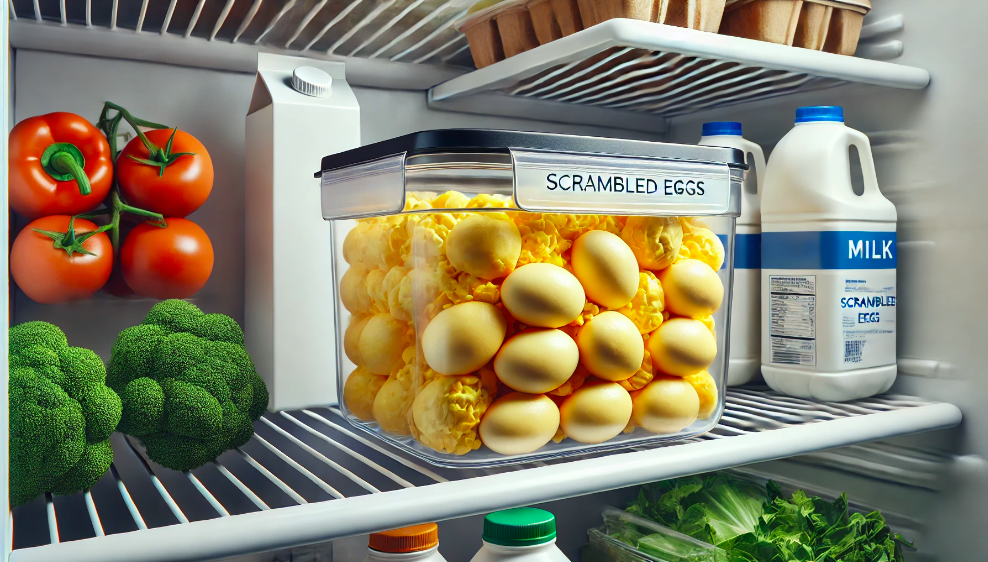
Scrambled eggs typically last in the fridge for about 3 to 4 days when stored properly in an airtight container. This time frame applies to cooked eggs that are promptly refrigerated within two hours of cooking. Beyond this period, the quality and safety of the eggs can decline, increasing the risk of foodborne illnesses.
Proper Storage Guidelines For Scrambled Eggs
- Use an Airtight Container: Store scrambled eggs in a sealed, airtight container to prevent exposure to air and contaminants.
- Refrigerate Immediately: Cooked eggs should be refrigerated within two hours of cooking to reduce bacterial growth. If the room temperature is above 90°F (32°C), refrigerate them within one hour.
- Avoid Large Batches: Storing smaller portions helps the eggs cool faster and evenly, reducing the risk of bacterial growth.
- Label and Date: Mark the storage container with the date they were prepared to keep track of freshness.
- Keep at the Right Temperature: Ensure your fridge is set to 40°F (4°C) or below to maintain safety.
Shelf Life Of Scrambled Eggs In The Fridge
The shelf life of scrambled eggs depends on how they are stored:
- Freshly Cooked Scrambled Eggs: 3 to 4 days in the fridge.
- Scrambled Eggs Mixed with Ingredients (e.g., cheese or vegetables): May spoil faster due to added perishable ingredients, so aim to consume within 2 to 3 days.
- Frozen Scrambled Eggs: Can last up to 2 months if stored in a freezer-safe container or bag.
Signs That Scrambled Eggs Are No Longer Safe To Eat
- Unpleasant Odor: A sour or off smell indicates spoilage.
- Change in Texture: Slimy, watery, or unusually dry eggs should be discarded.
- Color Change: If the eggs turn greyish or have dark spots, they are no longer safe.
- Mold Growth: Any visible mold is a clear sign of spoilage.
- Taste Alteration: Eggs with an unusual or bad taste should not be consumed, even if they appear normal.
Tips To Maintain Freshness Of Scrambled Eggs
- Cool Quickly Before Storing: Allow eggs to cool to room temperature before placing them in the fridge to avoid raising the fridge’s temperature.
- Portion Small Servings: Store scrambled eggs in single-meal portions for easy reheating and to reduce the risk of contamination.
- Keep Away from Strong-Smelling Foods: Eggs can absorb odors from nearby items, so store them away from foods like onions or garlic.
- Reheat Properly: Reheat scrambled eggs to an internal temperature of 165°F (74°C) before eating.
- Avoid Repeated Refrigeration: Do not leave eggs out after reheating and then place them back in the fridge. Discard leftovers.
Safety Concerns With Eating Expired Scrambled Eggs
Consuming expired scrambled eggs poses risks of foodborne illnesses, particularly Salmonella and E. coli infections. Symptoms may include nausea, vomiting, diarrhea, and stomach cramps. To avoid these risks:
- Follow the recommended storage time strictly.
- Never taste-test eggs to determine safety; when in doubt, throw them out.
- Pay attention to storage conditions and always keep scrambled eggs at the correct temperature.