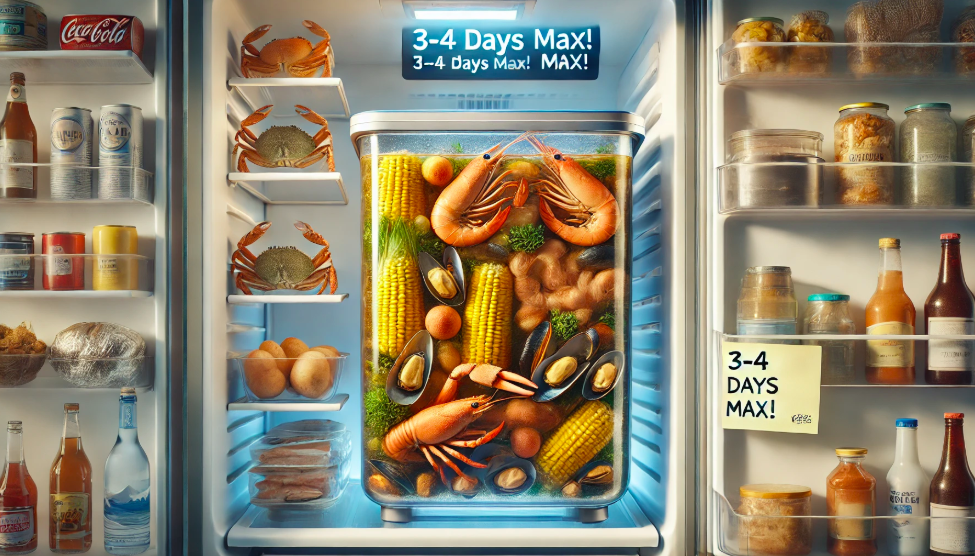
A seafood boil can be safely stored in the refrigerator for up to 3 to 4 days. To ensure freshness and safety, it's important to handle and store leftovers properly. Seafood boils often contain a variety of ingredients, including shellfish like shrimp, crab, and crawfish, which have a relatively short shelf life. To maximize the lifespan of your seafood boil, refrigerate it within two hours of cooking and store it in an airtight container.
Proper Storage Techniques For Seafood Boil In The Fridge
To store leftover seafood boil in the refrigerator safely and maintain its quality, follow these steps:
- Cool Promptly: After cooking, allow the seafood boil to cool to room temperature. Avoid leaving it out for more than two hours to prevent bacterial growth.
- Separate Components: Remove the seafood from the shells and store it separately from the broth. This helps maintain the texture and flavor of each component.
- Use Airtight Containers: Place the seafood and broth into separate airtight containers. This prevents odors from spreading and protects the food from contamination.
- Label and Date: Clearly label each container with the contents and the date of storage. This practice helps you keep track of freshness and ensures consumption within a safe timeframe.
- Refrigerate Promptly: Store the containers in the refrigerator at or below 40°F (4°C). Proper refrigeration slows bacterial growth and preserves the quality of the seafood boil.
By following these steps, you can safely store your seafood boil in the refrigerator for up to 2-3 days. Always check for signs of spoilage, such as off odors or slimy textures, before consuming leftovers.
Signs Your Seafood Boil Has Gone Bad
To determine if your seafood boil has spoiled, look for the following signs:
- Unpleasant Odor: Fresh seafood should have a mild, ocean-like smell. A strong, sour, or ammonia-like odor indicates spoilage.
- Slimy Texture: Seafood should feel firm and moist. A slimy or sticky surface suggests bacterial growth.
- Discoloration: Fresh seafood maintains its natural color. Any yellowing, black spots, or unusual discoloration are signs of spoilage.
- Mold Presence: Visible mold, which may appear fuzzy or slimy in green or black hues, indicates the seafood is no longer safe to eat.
- Off Taste: If the seafood tastes sour, bitter, or otherwise off, it has likely gone bad and should not be consumed.
Always store leftover seafood boil in airtight containers in the refrigerator and consume it within 2-3 days to ensure safety.
Can You Freeze Seafood Boil For Longer Shelf Life?
Yes, you can freeze a seafood boil to extend its shelf life. Freezing slows down the growth of bacteria and other microorganisms, effectively preserving the food. To maintain quality, it's important to store the seafood boil at temperatures below-18°C (0°F). Proper packaging, such as using airtight containers or heavy-duty freezer bags, helps prevent freezer burn and maintains the dish's flavor and texture. When ready to eat, thaw the seafood boil in the refrigerator to ensure safety and quality.
Tips For Reheating Refrigerated Seafood Boil Safely
Reheating a refrigerated seafood boil requires careful attention to maintain its flavor and ensure safety. Here are some straightforward tips:
- Store Properly: After your meal, place leftovers in an airtight container and refrigerate within two hours to prevent bacterial growth.
- Reheat Once: Only reheat seafood boil once. Repeated reheating can increase the risk of foodborne illness.
- Use the Oven: Preheat your oven to 275°F (135°C). Spread the seafood evenly on a baking sheet or in a casserole dish, add a splash of water to retain moisture, cover with aluminum foil, and heat for 10 to 15 minutes.
- Stovetop Method: Place the desired portion of seafood into a pot on the stove and add water, broth, or wine to prevent drying out and add flavor. Cover the pot with a lid and warm the seafood boil on low heat, stirring occasionally to ensure even heating.
- Avoid the Microwave: Microwaving seafood can make it rubbery and dry due to high heat. If necessary, splash the seafood with a bit of water and heat on low for about six minutes.
- Check Temperature: Ensure the internal temperature of the reheated seafood reaches at least 165°F (74°C) to kill any harmful bacteria.
- Consume Promptly: After reheating, eat the seafood boil immediately. Do not leave it at room temperature for extended periods.
What Affects The Freshness Of Seafood Boil In The Fridge?
The freshness of a seafood boil stored in the refrigerator is influenced by several key factors:
- Temperature: Maintaining your refrigerator at or below 40°F (4°C) is crucial. Higher temperatures can accelerate bacterial growth, leading to quicker spoilage.
- Storage Method: Using airtight containers helps preserve freshness by preventing exposure to air and contaminants. Proper sealing also minimizes the absorption of other odors from the refrigerator.
- Seafood Type: Different seafood components have varying shelf lives. For instance, shrimp typically remain fresh for 3–4 days, while crab can last 3–5 days. Mussels and clams are more perishable, usually staying fresh for only 1–2 days.
- Time Before Refrigeration: It's important to refrigerate the seafood boil within two hours of cooking. Delaying refrigeration can allow bacteria to multiply, reducing the dish's freshness and safety.
- Reheating Practices: When reheating, ensure the seafood reaches an internal temperature of 165°F (74°C) to eliminate any harmful bacteria. Proper reheating helps maintain both safety and quality.