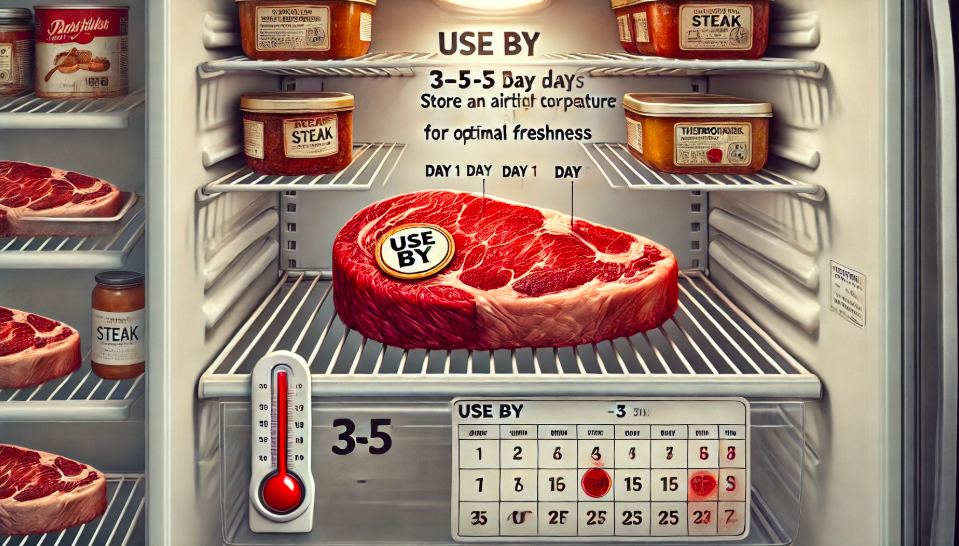
Steak can typically last 3 to 5 days in the fridge when stored properly. To maintain freshness, store the steak in its original packaging or wrap it tightly in plastic wrap or aluminum foil to minimize exposure to air, which can accelerate spoilage. If you’ve already cooked the steak, it will last for about 3 to 4 days in the fridge. For longer storage, freezing the steak is a good option, as it can keep for up to 6-12 months in the freezer without significant loss of quality. Always check for signs of spoilage, such as an off smell, slimy texture, or discoloration, before consuming.
Ideal Storage Conditions For Steak In The Fridge
To store steak properly in the fridge, keep it at or below 40°F (4°C), as this slows bacterial growth and preserves its freshness. Store the steak in the coldest part of the fridge, usually towards the back, where the temperature is stable. If the steak is not in vacuum-sealed packaging, wrap it tightly in plastic wrap or foil, or place it in a resealable plastic bag or airtight container to prevent exposure to air and contamination. It’s also important to store raw steak on a plate or tray to catch any leaking juices and avoid contact with other foods, especially ready-to-eat items. For the best quality, use fresh steak within 3-5 days. If you don’t plan to cook it within that timeframe, freezing is a good option. To freeze, wrap the steak tightly in plastic wrap and foil, or use a vacuum-seal bag, and label it with the date. Properly frozen steak can last 6-12 months without significant loss of quality.
Maximizing Steak Freshness: Best Storage Practices
To maximize the freshness of steak and keep it tasting great, proper storage is key. Below are some best practices for storing steak that help preserve its flavor, texture, and safety.
1. Refrigeration For Short-Term Storage
- Wrap it tightly:After buying steak, wrap it tightly in plastic wrap, foil, or butcher paper to prevent air from reaching the meat. This helps reduce moisture loss and prevents the steak from drying out.
- Use an airtight container:If you have extra wrapping materials, place the wrapped steak in an airtight container or resealable bag to keep out air.
- Refrigerate immediately:Store the steak in the coldest part of the fridge, usually at the back, to keep it at a stable temperature of around 34°F to 38°F (1°C to 3°C). For best results, consume it within 3-5 days.
2. Freezing For Long-Term Storage
- Wrap properly before freezing:If you're not planning to cook the steak within a few days, freezing is a great option. First, wrap the steak in plastic wrap or wax paper, then cover it with aluminum foil or place it in a freezer bag. Squeeze out as much air as possible to prevent freezer burn, which can ruin the texture.
- Label and date:It’s a good idea to label the package with the date so you can keep track of how long the steak has been frozen. Steak can be kept frozen for up to 6 months without a noticeable loss in quality.
- Thawing tips:Thaw frozen steak in the refrigerator, not at room temperature, to prevent bacteria growth. For faster thawing, you can use the cold water method—put the steak in a sealed bag and submerge it in cold water, changing the water every 30 minutes.
How Long Can Steak Be Safely Stored In The Fridge?
The safe storage time for steak in the fridge depends on whether it’s raw or cooked:
· Raw Steak: You can safely store raw steak in the fridge for 3 to 5 days. Make sure it’s in its original packaging, or place it in an airtight container or tightly wrapped in plastic wrap or aluminum foil to prevent contamination and preserve freshness.
· Cooked Steak: Cooked steak can be kept in the fridge for 3 to 4 days. It should be stored in an airtight container or tightly wrapped to keep bacteria out and maintain its quality.
If you're unsure whether a steak is still good, check for signs like bad smells, slimy texture, or discoloration. If it shows any of these, it’s best to discard it.
Does Marinating Affect Steak’s Shelf Life?
Marinating steak can influence its shelf life, but it doesn't necessarily make it last longer. Here's how marination affects your steak and its shelf life:
1. What Is Marinating?
Marinating is when you soak meat in a mixture of liquids and seasonings before cooking. The marinade often includes ingredients like oil, vinegar, lemon juice, herbs, and spices.
2. Does Marinating Preserve Steak?
While marinades can enhance the flavor and texture of steak, they don't significantly extend the meat's shelf life. In fact, marinating might slightly shorten it if the steak is left in the marinade for too long. This is because acids (like vinegar or citrus) in the marinade can start to break down the proteins in the meat, which could affect the texture and overall quality over time.
3. How Long Can Marinated Steak Last In The Fridge?
If you marinate steak and then refrigerate it, it should be cooked within 1-2 days. This is the general guideline for marinated meat. The marinade itself doesn’t prevent bacteria from growing. Bacteria thrive in temperatures above 40°F (4°C), so marinated steak should be kept in the fridge, and not left out at room temperature for too long.
Signs Of Spoiled Steak: What To Look For
When you buy a steak, it's important to know the signs of spoilage to avoid eating something unsafe. Here’s a simple guide on how to spot spoiled steak:
1. Color Change
- Fresh steakis usually bright red or deep purple, depending on how it's been stored. If the steak starts to turn brown or gray, that can be a sign it’s beginning to spoil. However, note that a small brown area doesn’t always mean it’s bad, especially if the steak has been vacuum-sealed or refrigerated for a while.
2. Bad Smell
- Fresh steak should have a clean, meaty smell. If the steak has a sour or off odor, that’s a strong sign it’s spoiled. As meat ages, bacteria start to break it down, causing a bad smell.
3. Slimy Texture
- If the surface of the steak feels slimy or sticky to the touch, this means bacteria are growing on it. The steak may feel slippery even after rinsing it under cold water. If this happens, it's best to discard the steak.
4. Excessive Discoloration Or Patches
- Sometimes, spoiled steak has patches of green or yellow spots. These colored spots are a sign that mold or bacteria are growing on the meat, and you should not eat it.
5. Softness Or Mushiness
- When fresh, steak should feel firm to the touch. If the steak feels unusually soft or mushy, it’s a sign that the meat has started to break down. This is especially true if the steak feels spongy when pressed.