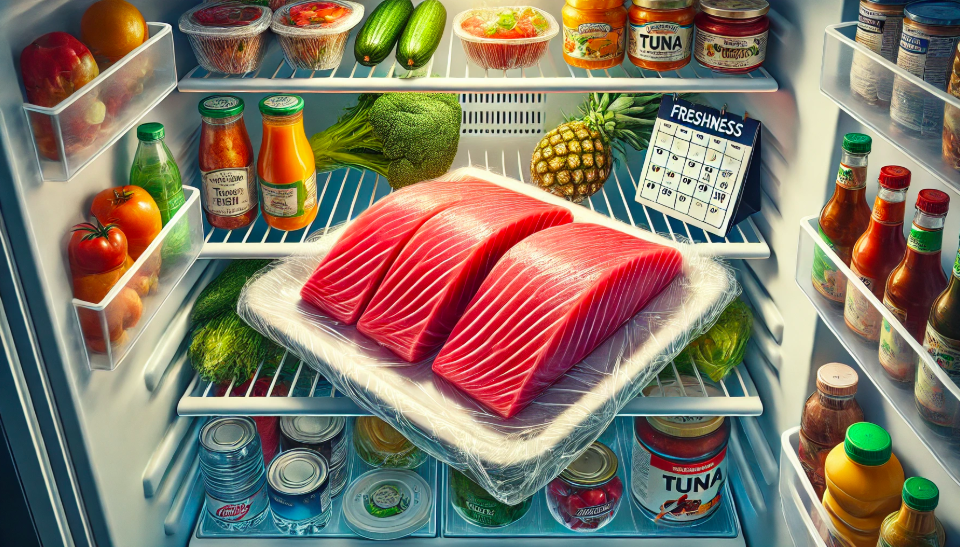
The duration a tuna fish lasts in the fridge depends on its form and storage method. Fresh tuna can last 1–2 days in the fridge when stored properly at a temperature below 40°F (4°C). Ensure it’s wrapped tightly or stored in an airtight container to prevent exposure to air and contamination. Cooked tuna can last 3–4 days in the fridge if stored in a sealed container or wrapped properly.
Factors Affecting The Shelf Life Of Tuna Fish
- Storage Temperature:Keeping tuna at the right temperature is crucial. Fresh tuna should be stored in the refrigerator at or below 40°F (4°C) to slow bacterial growth. If left at room temperature for more than two hours, it should be discarded.
- Packaging:Proper packaging helps maintain freshness. Using airtight containers or vacuum-sealed bags prevents exposure to air, which can cause spoilage.
- Freshness at Purchase:The initial quality of the tuna affects its shelf life. Purchasing tuna that is already close to spoiling will result in a shorter usable period, even with proper storage.
Shelf Life of Canned Tuna After Opening
Once opened, canned tuna should be transferred to a clean, airtight container and stored in the refrigerator. Under these conditions, it remains safe to eat for 3 to 4 days.
To maintain its quality and prevent spoilage, always keep the tuna covered and refrigerated. If you need to store it for a longer period, you can freeze the tuna in an airtight container, where it will maintain its best quality for about 3 months.
Signs That Tuna Fish Has Gone Bad
To determine if tuna has spoiled, observe the following signs:
- Color Change: Fresh tuna is typically deep red or light pink. Spoiled tuna may appear off-colored, often with a milky look or shades of brown.
- Unpleasant Odor: Fresh tuna has a mild, ocean-like smell. If it emits a sour or strong fishy odor, it is likely spoiled.
- Slimy Texture: A slimy or sticky film on the surface indicates spoilage. Fresh tuna should feel moist but not slimy.
- Mold or Discoloration: Visible mold or dark spots are clear signs of spoilage. Fresh tuna should not have any unusual spots or growths.
- Can Condition (for canned tuna): If the can is leaking, bulging, rusted, or severely dented, the tuna inside may be unsafe to eat.
Consuming spoiled tuna can lead to food poisoning, with symptoms like vomiting, stomach cramps, and diarrhea. Always inspect tuna carefully before consumption to ensure it is safe to eat.
Tips to Extend the Shelf Life of Tuna Fish
General Tips:
- Avoid Temperature Fluctuations: Keep tuna at a consistent temperature to prevent spoilage. Avoid storing it near heat sources or in areas with high humidity.
- Check for Signs of Spoilage: Before consuming, inspect the tuna for any off smells, discoloration, or slimy texture. If any of these signs are present, it's best to discard the tuna.
Difference Between Fresh and Cooked Tuna Storage
Key Differences:
- Shelf Life: Fresh tuna has a shorter shelf life in the refrigerator (1-2 days) compared to cooked tuna (3-4 days).
- Preparation for Storage: Fresh tuna should be wiped dry to remove excess moisture before storing, while cooked tuna should be cooled to room temperature before refrigeration.
- Freezing: Both fresh and cooked tuna can be frozen to extend their shelf life. Fresh tuna can be frozen for up to 3 months, while cooked tuna can be frozen for about 2 months
Health Risks of Consuming Spoiled Tuna
Consuming spoiled tuna can lead to food poisoning, primarily due to bacterial contamination and the formation of harmful substances like histamine. When tuna is not stored properly, bacteria can grow and convert naturally occurring histidine in the fish into histamine, leading to a condition known as scombroid poisoning. Symptoms of scombroid poisoning typically appear within 10 to 60 minutes after eating the spoiled fish and may include:
- Flushed skin
- Headache
- Itchiness
- Blurred vision
- Abdominal cramps
- Diarrhea